Naturally Cloudy Olive Oil: What Unfiltered Extra Virgin Really Means
Pour a supermarket olive oil into a glass and it is usually bright, clear and golden. Pour a small-producer extra virgin and you might get something quite different: a hazy, almost opaque green-gold liquid with the faintest hint of sediment at the bottom. If that has ever made you wonder whether something is wrong with the oil, the short answer is reassuring — nothing is wrong at all. In fact, that cloudiness is often a sign of an oil that has been left closer to its natural state.
“Naturally cloudy” or unfiltered olive oil is having a moment, and for good reason. But it is also widely misunderstood. Here is what the haze actually is, how it affects taste and shelf life, and how to decide whether an unfiltered oil is right for you.
What makes olive oil cloudy?
When olives are pressed, the resulting oil naturally carries tiny suspended particles: microscopic fragments of olive fruit and pulp, along with a small amount of water and the natural compounds dissolved in it. These particles are what scatter the light and give freshly pressed oil its characteristic cloudy, slightly opaque look.
Most large producers then filter the oil — passing it through fine filters or letting it settle and decanting the clear layer — to remove those particles and produce a bright, transparent product with a longer, more predictable shelf life. An unfiltered oil skips that step, or filters only very lightly. The haze you see is simply the fruit still present in the oil.
Cloudy is not the same as faulty
It is worth being clear about one thing: cloudiness from natural sediment is completely different from an oil that has gone rancid or been badly made. A good unfiltered oil should still smell fresh, grassy and fruity, and taste peppery and alive. Haze on its own tells you about filtering, not quality — a hazy oil can be superb, and a crystal-clear oil can be mediocre. Taste and aroma are what matter.
Does unfiltered olive oil taste better?
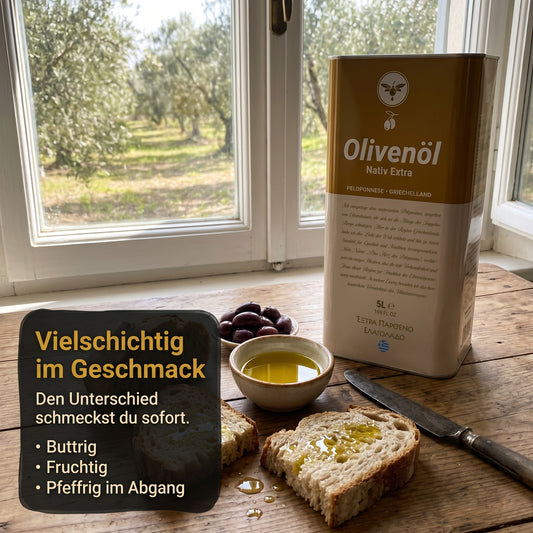
Many people think so, and there is a logic to it. Those suspended fruit particles carry flavour and aroma compounds, so a freshly pressed unfiltered oil often tastes fuller, greener and more intensely “olivey” — with a pronounced fruitiness and that healthy peppery kick at the finish. For drizzling over bread, salads, soups and grilled vegetables, that extra intensity can be a real pleasure.
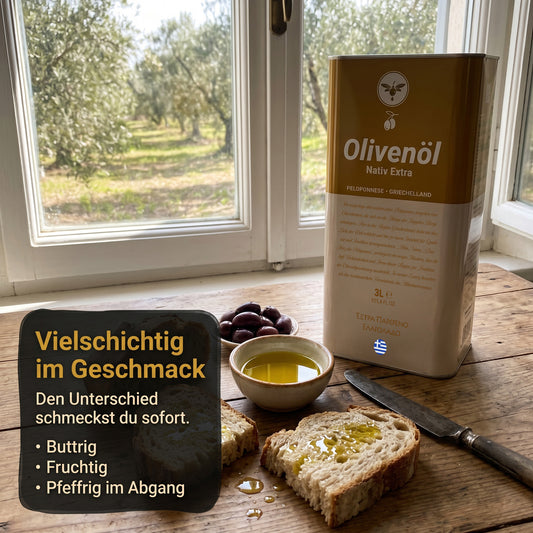
Our own Premium Olive Oil from the Peloponnese is deliberately left naturally cloudy and unfiltered for exactly this reason: hand-harvested, mechanically cold-extracted and lab-tested, it keeps the full spicy, buttery, peppery character of the fruit rather than stripping it back for the sake of a clear appearance.
Is cloudy olive oil healthier?
This is where it gets interesting. Extra virgin olive oil is prized for its polyphenols — natural antioxidants linked to its flavour, its peppery bite and its reputation as a cornerstone of the Mediterranean diet. Because unfiltered oil retains more of the natural fruit content, some of these beneficial compounds and aromas remain in the bottle rather than being removed with the sediment.
That said, the picture is nuanced. The same water and particles that carry flavour can also, over time, speed up the natural ageing of the oil if it is stored poorly. So an unfiltered oil is at its most rewarding when it is fresh and well kept — which brings us to storage. We are describing quality and taste here, not making medical claims.
How to store naturally cloudy olive oil
Unfiltered oils reward a little care, because the natural sediment makes them slightly more sensitive to heat, light and time. To keep yours at its best:
- Keep it cool and dark. Store the bottle in a cupboard away from the hob and out of direct sunlight. Heat and light are the main enemies of any olive oil.
- Keep it sealed. Close the cap tightly after each use to limit contact with air, which causes oxidation.
- Use it while it is fresh. Unfiltered oils are best enjoyed within several months of opening rather than kept for years. Buy an amount you will realistically get through.
- Do not worry about a little settling. A fine layer of sediment at the bottom of the bottle is normal. Give it a gentle swirl before pouring.
You may also notice that cloudy oil can turn thicker or partly solid if it gets cold — for example in a chilly larder or the fridge. This is harmless and reverses completely once the oil returns to room temperature.
Filtered or unfiltered: which should you buy?
Neither is “better” in absolute terms — they simply suit different needs. A clear, filtered oil is stable, neutral-looking and a dependable all-rounder. A naturally cloudy, unfiltered oil trades a little shelf life for more character, aroma and freshness, and is a wonderful choice as a finishing oil where the flavour really shows. If you love tasting the fruit in your oil and you use it regularly, unfiltered is well worth seeking out.
Frequently asked questions
Is cloudy olive oil safe to eat?
Yes. Cloudiness from natural fruit sediment is completely safe and is a normal feature of unfiltered extra virgin olive oil. As long as the oil smells fresh and tastes clean and fruity, the haze is nothing to worry about.
Why has my olive oil gone cloudy or solid in the cold?
Olive oil naturally thickens and can turn partly solid and cloudy at low temperatures. This is a harmless physical change, not a sign of spoilage, and it disappears once the oil warms back up to room temperature.
Should I filter cloudy olive oil at home?
There is no need. The sediment is edible and carries flavour. If you prefer a clearer pour, simply let the bottle stand undisturbed so the particles settle, then pour gently and leave the last cloudy bit behind.
Our product tip
Premium Olive Oil from the Peloponnese
Naturally cloudy, unfiltered and hand-harvested — extra virgin with the full fruity, peppery character of the olive.
Shop the olive oilSo the next time you see a hazy, green-gold oil in the bottle, take it as a good sign rather than a flaw. It usually means the fruit is still there — and with it, the aroma, the pepper and the pleasure of a truly natural extra virgin. Pour La Vie.