Laurel Oil (Lorbeeröl): Benefits, Uses and Why It's the Heart of Aleppo Soap
If you have ever used a genuine bar of Aleppo soap, you already know laurel oil — even if you have never bought a bottle of it. That warm, green, slightly woody scent and the soft, conditioning feel on the skin come from laurel oil, the ingredient that sets Aleppo soap apart from every ordinary bar. Yet laurel oil itself is rarely explained.
This guide looks at what laurel oil actually is, why it has been prized for skin and hair for centuries, and how to enjoy its qualities in the most authentic way — through traditional laurel soap.
What is laurel oil?
Laurel oil, known in German as Lorbeeröl and botanically as Laurus nobilis, is pressed from the berries of the bay laurel tree — the same evergreen whose leaves flavour soups and stews. In late autumn the ripe black berries are harvested, gently warmed and pressed, releasing a thick, deep-green oil with a distinctive herbal aroma.
It is a labour-intensive oil to make, which is part of why it has always been considered precious. A large quantity of berries yields only a modest amount of oil, and the finest laurel oil is still produced in small batches in the eastern Mediterranean, where the tradition runs deepest. Its natural richness in fatty acids and aromatic compounds is what gives it such a loyal following in natural skincare.
Laurel oil and Aleppo soap: an ancient partnership
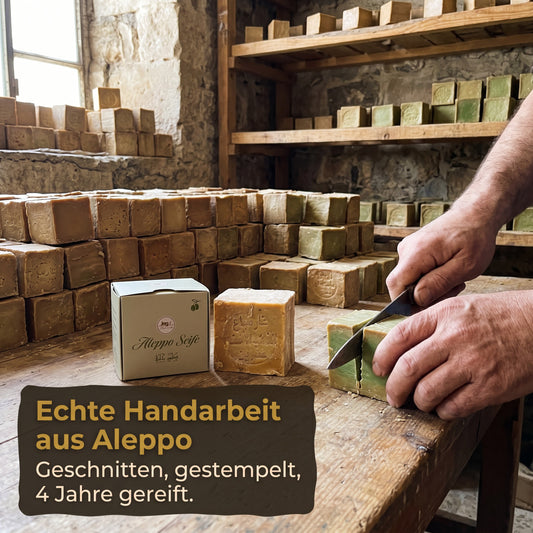
Laurel oil is inseparable from the story of Aleppo soap, one of the oldest soaps in the world. Traditional Aleppo soap is made from just a few things: olive oil, water and lye, cooked slowly and then enriched with laurel oil before the bars are hand-cut and left to cure for years. The olive oil provides gentle, moisturising cleansing; the laurel oil brings its conditioning character and unmistakable scent.
The proportion of laurel oil is the mark of a soap's character. A bar with a lower laurel content is milder and well suited to everyday washing and sensitive skin, while a higher laurel percentage — such as 40% — gives a richer, more aromatic bar that many people prefer for hair, beards and drier skin. Choosing the right laurel level is really a matter of personal preference.
Why laurel oil is loved in natural skincare
For generations, people around the Mediterranean and the Levant have turned to laurel oil as part of a simple, natural care routine. Its appeal is easy to understand: it is a plant oil with a rich, cushioning texture that helps skin feel soft and comfortable rather than tight after washing.
Because it is naturally aromatic, laurel oil also gives traditional soap its clean, herbal fragrance without any need for synthetic perfume — a real advantage for anyone who prefers cosmetics with a short, recognisable ingredient list. Used in soap form, laurel oil suits most skin types, and its gentle, no-frills character is exactly why fans of natural cosmetics keep coming back to it.
Laurel oil for hair and scalp
One of the most popular uses for laurel-rich soap is as a natural shampoo bar. Washing hair with a laurel Aleppo bar appeals to people looking to simplify their routine and move away from bottles of conventional shampoo. The laurel oil helps the hair feel soft and manageable, while the olive-oil base cleanses without stripping.
If you are switching from regular shampoo, allow your hair a short adjustment period, and finish with a simple acidic rinse — a splash of diluted apple cider vinegar or lemon water — to smooth the hair and bring back shine. Many people with beards use the same bar to keep facial hair soft and the skin beneath it comfortable.
How to use laurel oil the traditional way
While you can buy laurel oil on its own, the simplest and most time-honoured way to enjoy it is through a good bar of Aleppo soap, where it is already balanced with olive oil and cured to mildness. To get the most from it:
- Face and body: Work the bar into a light lather in warm water, massage gently over the skin, then rinse. Follow with a moisturiser if your skin feels dry.
- Hair: Rub the wet bar between your hands or along the lengths, massage into the scalp, then rinse well and follow with an acidic rinse.
- Shaving: The rich lather makes a natural, fragrance-free alternative to shaving foam.
- Storage: Keep the bar on a well-draining dish between uses so it dries out and lasts far longer.
Frequently asked questions
Is laurel oil banned?
No. Laurel oil (Laurus nobilis) is a long-established cosmetic ingredient and is widely used in traditional soaps sold across Europe. The confusion usually comes from the fact that essential oils and certain natural fragrance components carry labelling rules, and some people can be sensitive to aromatic compounds. As with any new cosmetic, if you have very reactive skin it is sensible to patch-test first. Genuine laurel Aleppo soap remains perfectly legal and freely available.
How much laurel oil should a soap contain?
There is no single "right" number — it depends on what you want. Lower laurel percentages make a milder, everyday bar that is kind to sensitive skin, while higher percentages such as 40% give a richer, more aromatic soap that many prefer for hair and drier skin. If you are new to Aleppo soap, a balanced bar is a good place to start.
Can I use laurel oil on my face?
Yes. In soap form, laurel oil is gentle enough for facial cleansing and is a favourite among people who like a simple, natural routine. If your skin tends to be dry, follow your wash with a light moisturiser, and always rinse thoroughly.
Our product tip
Aleppo Soap – 40% Laurel Oil & 60% Olive Oil
Traditionally hand-cut and aged at least four years — a laurel-rich bar for face, body and hair.
Shop Aleppo SoapLaurel oil is one of those quiet, natural ingredients that has never needed reinventing — a berry, pressed into oil, and folded into soap the same way it has been for centuries. Experience it the authentic way, in a bar that has been hand-cut and patiently aged. Pure, natural care, with nothing added. Pour La Vie.