How to Store Olive Oil to Keep It Fresh (and Serve It Well)
You have found an olive oil you love — fruity, peppery, alive. Then a few weeks later it tastes flat and greasy, and you wonder what went wrong. The oil did not fail you; its storage did. Extra virgin olive oil is a fresh, living product, closer to a fruit juice than a tin of beans, and it begins to fade the moment it meets the things it dislikes most.
The good news is that keeping olive oil fresh is simple once you know the rules. In this guide we explain what actually spoils olive oil, exactly how to store it, how long it really lasts, and how to serve it at the table without ruining the bottle. Get these small habits right and every drizzle will taste the way the producer intended.
What Actually Makes Olive Oil Go Off?
Olive oil does not spoil like milk. Instead it slowly oxidises, and its delicate aromatic compounds and antioxidants break down until the flavour turns dull, waxy or unpleasantly bitter. Four things drive that process, and every good storage habit is really about limiting one of them.
Light
Light — especially direct sunlight, but also bright kitchen lighting — is the single biggest enemy of olive oil. It accelerates oxidation dramatically, which is why the clear glass bottles that look so pretty on a windowsill are the worst possible home for good oil.
Heat
Warmth speeds up every chemical reaction inside the bottle. Storing oil next to the hob, the oven or on a sunny counter will age it far faster than a cool, shaded spot.
Air
Oxygen is what “oxidation” is named after. Every time you open the bottle, air gets in; a half-empty bottle left open for weeks has a large pocket of air working against it.
Time
Even stored perfectly, olive oil is best fresh. Unlike wine, it does not improve with age — it is at its peak young and declines steadily, so buying a size you will actually finish matters.
How to Store Olive Oil: The Essentials
Put the four enemies together and the rules almost write themselves:
- Keep it in the dark. Store your oil in a closed cupboard or pantry, or in an opaque container that blocks light completely.
- Keep it cool. Aim for a steady 14–18°C, away from the oven, hob, dishwasher and any sunny window. A cupboard on an interior wall is ideal.
- Keep it closed. Always reseal the bottle straight after use so you are not leaving the oil open to the air.
- Keep it away from strong smells. Olive oil can pick up odours, so store it away from onions, spices and cleaning products.
- Buy a sensible size. Choose a bottle you will use within a couple of months of opening rather than a giant tin that lingers half-full.
One question we hear a lot: should you refrigerate olive oil? You can, and it will not harm it, but the oil will turn thick and cloudy and may form soft white clumps. It clears again at room temperature, yet for everyday use a cool, dark cupboard is far more practical than the fridge.
The Best Container for Olive Oil
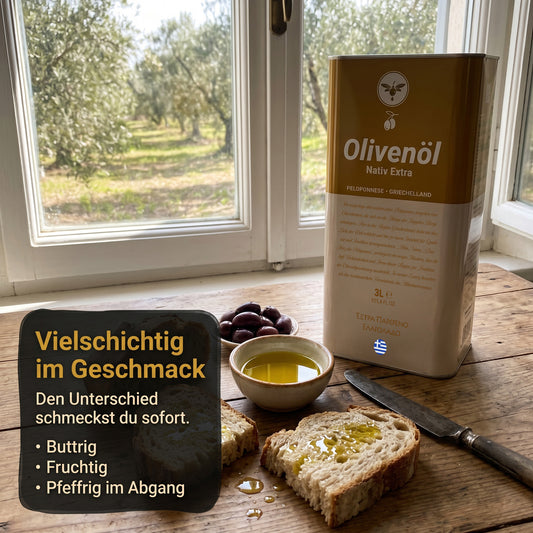
If you buy oil in a large tin or a clear bottle, the smartest thing you can do is decant your working supply into a proper storage-and-serving vessel and keep the rest sealed and dark. The ideal container blocks light entirely, seals well, and pours cleanly without dribbling oil down the side.
That is exactly why we designed our stoneware olive oil bottle with a drip-free pourer. Its solid matte-black clay body gives 100% light protection — nothing reaches the oil inside — while the stainless-steel spout has an auto-closing flap that opens as you tilt and snaps shut the moment you set it down. You get the freshness of a dark container and the convenience of a clean, measured pour, all in one piece that looks good enough to leave on the counter. Refill it from your sealed supply and your best oil stays protected right up to the last drop.
How Long Does Olive Oil Last?
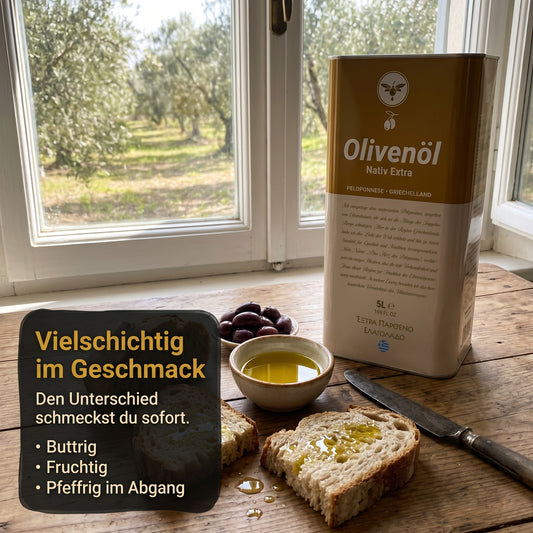
Most extra virgin olive oil is at its best within about 18–24 months of harvest, and within a couple of months once the bottle is opened. Producers print a “best before” date, but the more useful figure is the harvest date if it is shown: the closer to harvest, the fresher the oil. A naturally cloudy, unfiltered oil like our Peloponnese extra virgin is especially worth enjoying while young, when its polyphenols and aromas are at their peak. Once you open a bottle, treat it as an ingredient to use, not a trophy to save.
Signs Your Olive Oil Has Gone Rancid
Trust your nose and tongue. Fresh olive oil smells grassy, fruity or peppery; rancid oil smells flat, waxy, or like old crayons, putty or stale nuts. On the palate it loses its lively bite and tastes greasy or musty. Rancid oil is not dangerous, but it is unpleasant and has lost most of the beneficial compounds you paid for — so if a bottle has drifted past its best, use it up quickly in cooking or start fresh.
Serving Olive Oil at the Table
A good oil deserves to be on the table for finishing salads, bread and vegetables — but the pretty clear cruet that lives by the stove is a fast route to rancidity. The trick is to serve from a vessel that protects the oil between uses: opaque, well-sealed and easy to pour. Fill it from your main bottle as needed, keep it out of direct sun, and wash and dry it thoroughly before topping up so no old, oxidised oil taints the fresh.
Our product tip
Olive Oil Stoneware Bottle with Drip-Free Pourer
Solid matte-black clay for 100% light protection, with an auto-closing, drip-free spout — it keeps your oil fresh and your counter clean.
Shop the stoneware bottleFrequently Asked Questions
Should I keep olive oil in the fridge?
You do not need to. Refrigeration is not harmful but makes the oil cloudy and thick, and it clears again at room temperature. A cool, dark cupboard away from heat is the easiest way to keep everyday oil fresh.
Is it bad to store olive oil next to the stove?
Yes. The warmth and light near a hob or oven are two of the biggest causes of oxidation. Keep your oil in a nearby cupboard instead and only bring out what you are using.
Can I store olive oil in a clear glass bottle?
Only if you keep that bottle inside a dark cupboard. Clear glass offers no protection from light, so on an open shelf or windowsill it will let your oil deteriorate quickly. An opaque, light-proof container is far safer.
Great olive oil is a small luxury, and protecting it costs nothing but a little care: keep it cool, dark and closed, buy what you will use, and pour it from a vessel that shields it from light. Do that, and every meal gets the full, vivid flavour the olives were grown for — Pour La Vie.