Green Olives vs Black Olives: What's the Difference?
Walk past any olive counter and the same question comes up: what is the real difference between green olives and black olives? Are they two different fruits, two different trees, or simply the same olive at different moments in its life? The short answer is the last one — but the longer answer is far more interesting, and it shapes everything from taste and texture to how the olives are cured and whether they have been left in their natural state. This guide walks you through it all, so you can choose with confidence and bring the honest flavours of the Mediterranean to your table.
The simple answer: it is all about ripeness
Green olives and black olives almost always come from the same kind of tree, Olea europaea. The colour you see in the jar is mostly a question of when the fruit was picked. Olives start out firm and green, and as they ripen on the branch under the late-summer sun they gradually turn straw-coloured, then rosy, then purple, and finally a deep glossy black. So a green olive is an unripe olive, harvested early, while a black olive is a fully ripe one, harvested later in the season.
That single difference in timing has a knock-on effect on almost everything else. A green olive picked early is denser, firmer and contains less oil, which is why it holds a satisfying snap when you bite into it. A ripe black olive has had more time to develop oil and soften, giving it a rounder, mellower character. Two stages of the same fruit, two very different eating experiences.
How curing shapes the final flavour
Fresh from the tree, an olive of any colour is intensely bitter and practically inedible. That bitterness comes from a compound called oleuropein, and removing it is the whole purpose of curing. The curing method matters just as much as ripeness when it comes to the final taste, and it is where tradition really shows.
How green olives are cured
Green olives are typically cured in brine — a simple solution of salt and water — sometimes with a splash of vinegar. Many traditional Greek green olives, such as the plump Chalkidiki variety, are left to ferment naturally in that brine over weeks and months. This slow, living process tames the bitterness gently while preserving the fruit's bright, grassy, slightly tangy flavour. Because nothing is rushed, the olive keeps its firm bite and a clean, fresh taste.
How black olives are cured
Naturally ripe black olives, like the celebrated Kalamata, are usually cured in brine or with a combination of salt and time. A genuine Kalamata is left to ripen fully on the tree and then cured slowly, which deepens its colour to a natural purple-black and develops its signature rich, fruity, almost wine-like flavour. The result is softer than a green olive, with a smooth, full-bodied taste that lingers.
Taste and texture: what to expect
If you want a quick mental shortcut, think of green olives as the crisp, zesty option and black olives as the soft, mellow one. Green olives tend to be firmer, brighter and a little more bitter or tangy, which makes them wonderfully refreshing. Naturally ripened black olives are fruitier, oilier and more rounded, with a depth that pairs beautifully with rich foods. Neither is better than the other — they simply belong to different moods and different dishes.
You can taste the contrast side by side. A bowl of firm Greek green olives with their pit next to a dish of glossy black Kalamata olives is one of the easiest and most rewarding tastings you can do at home.
Nutrition at a glance
Both green and black olives are a cornerstone of the Mediterranean way of eating. They are naturally rich in heart-friendly monounsaturated fats and contain plant antioxidants, while staying low in sugar. Because ripe black olives have had longer to develop their oil, they are usually slightly higher in fat and a touch more calorie-dense than firm green olives, though the difference is modest. Olives are also a salty food by nature, since curing relies on brine, so they are best enjoyed as a flavourful part of a balanced plate rather than eaten by the handful. As always, the cleanest choice is one cured with nothing more than salt, water and patience.
The colour question: are black olives always natural?
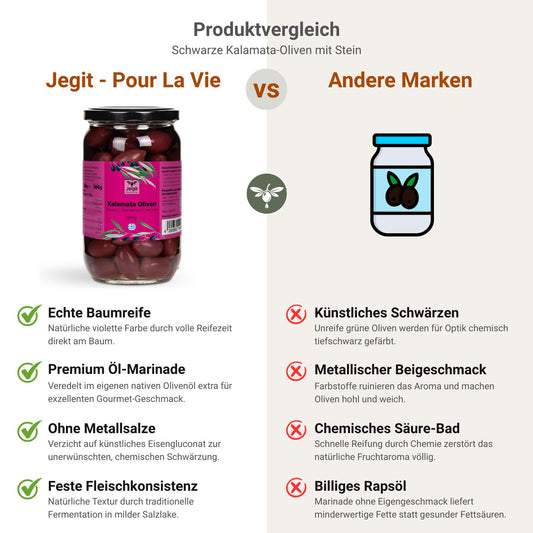
Here is a point worth knowing before you shop. Not every jet-black olive on the shelf earned its colour on the tree. Some inexpensive "black" olives are actually green olives that have been picked unripe and then darkened artificially through oxidation, often with the help of an additive such as ferrous gluconate, which fixes the black colour. These olives look uniform and matte, and they taste comparatively flat.
A naturally ripened olive tells a different story. Its colour is uneven and glossy, ranging from deep purple to brown-black, and its flavour is layered and fruity. This is exactly why provenance and curing method matter so much. When you choose olives that are described as naturally cured and free from artificial colouring, you are tasting the fruit as nature intended — which is the whole point of Pour La Vie.
How to use green and black olives in the kitchen
Their different characters make green and black olives suited to slightly different roles. Firm green olives are brilliant on an antipasti platter, stirred through a crisp salad, dropped into a martini, or marinated with lemon, garlic and herbs. Their snap and brightness cut through richness beautifully.
Soft, fruity black olives shine when their depth can do the work. Think Greek village salad with feta, slow-baked breads, hearty tomato sauces, traybakes and, of course, a classic tapenade. A Kalamata stirred into a warm dish releases a savoury, almost meaty richness that green olives cannot quite match. The happiest approach, though, is to keep both on hand and let the dish decide.
Choosing olives without additives
Whichever colour you reach for, the quality markers are the same. Look for olives sold with their pit, which protects texture and flavour. Favour those cured simply in brine or salt, with a short, honest ingredient list — ideally just olives, water, salt and perhaps vinegar or herbs. Avoid anything listing artificial colouring or a long line of stabilisers. And wherever possible, choose olives with a clear origin, because traditional Greek growing regions have been perfecting this craft for generations.
Our product tip
Greek Mixed Olives – Tasting Box
Compare green and black olives side by side with five naturally cured Greek varieties – no additives, just Mediterranean flavour.
Shop the Tasting BoxFrequently asked questions
Are green olives and black olives from different trees?
No. In almost all cases they come from the same species of olive tree. Green olives are simply harvested while still unripe, and black olives are harvested once they have fully ripened on the branch. The colour reflects ripeness, not a different plant.
Are black olives healthier than green olives?
Both are a valuable part of a Mediterranean diet, rich in monounsaturated fats and antioxidants. Ripe black olives carry a little more oil and so are slightly more calorie-dense, while green olives are firmer and lower in fat. The most important factor is choosing naturally cured olives without artificial additives.
How can I tell if a black olive is naturally ripened or dyed?
Naturally ripened olives have an uneven, glossy colour from purple to brown-black and a deep, fruity flavour. Artificially darkened olives look uniformly matte black and taste comparatively bland. Checking the ingredient list for colour-fixing additives is the surest way to know.
Bring both olives to your table
Green or black, the magic of a great olive lies in being left to ripen and cure the way nature intended. Keep a jar of each in your kitchen, taste them side by side, and you will quickly find your favourites for snacking, cooking and sharing. That is the spirit of Jegit – pure, natural and without additives. Pour La Vie.