Can You Cook With Extra Virgin Olive Oil? Heating, Smoke Point and Frying Explained
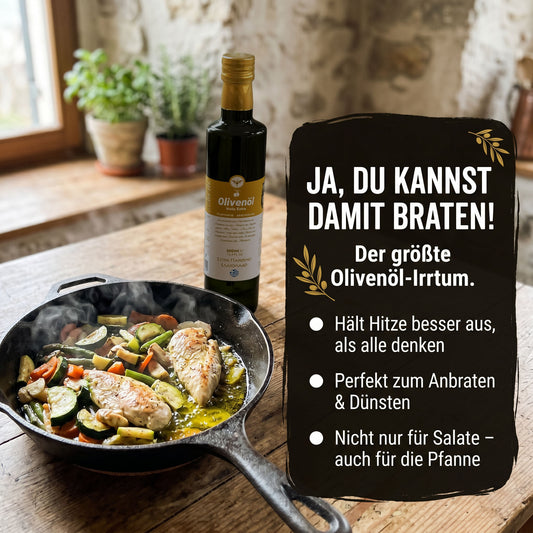
It is one of the most persistent myths in the kitchen: that you should never cook with extra virgin olive oil, and that heating it "destroys" the oil or even makes it harmful. Walk into any Greek or southern Italian home, however, and you will find a bottle of extra virgin olive oil doing exactly that — frying, roasting, sizzling in the pan — as it has for thousands of years. So what is the truth? Can you cook with extra virgin olive oil, and how do you do it well?
The short answer is yes. Extra virgin olive oil is not only safe to cook with, it is one of the most stable and flavourful oils you can use. The longer answer is worth understanding, because it will change how you cook and help you get the most from a good bottle.
Where the "don't heat olive oil" myth comes from
The worry usually centres on the smoke point — the temperature at which an oil begins to break down and smoke. Extra virgin olive oil has a lower smoke point than heavily refined oils, and somewhere along the way that fact hardened into a rule: never heat it. But smoke point is only part of the story, and on its own it is a poor guide to how an oil actually behaves in the pan.
What really matters for everyday cooking is oxidative stability — how well an oil resists breaking down when exposed to heat, air and time. And here extra virgin olive oil performs remarkably well, thanks to two things: a high proportion of monounsaturated fat, and a natural cargo of antioxidants and polyphenols that refined oils simply do not have.
What the smoke point of extra virgin olive oil really is
A good extra virgin olive oil has a smoke point in the region of 190–207°C, depending on its quality and freshness. The fresher the oil and the lower its free acidity, the higher and more forgiving that smoke point tends to be. To put that in context, most home cooking happens well below it:
- Gentle sautéing and sweating vegetables: around 120–150°C
- Roasting in the oven: typically 160–200°C
- Pan-frying and shallow frying: around 160–180°C
- Deep-frying: usually 170–190°C
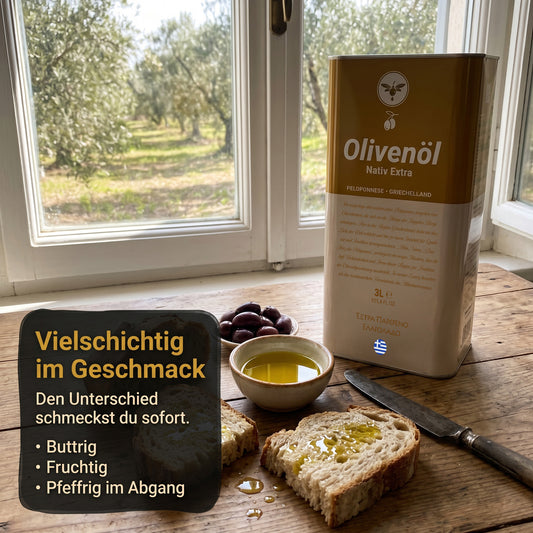
In other words, the temperatures you reach when you soften onions, roast a tray of vegetables or fry a piece of fish sit comfortably within what a quality extra virgin olive oil can handle. A naturally cloudy, unfiltered oil like our extra virgin olive oil from the Peloponnese is pressed to keep its acidity low and its polyphenols high — exactly the qualities that make an oil stable and dependable on the stove.
Why extra virgin olive oil is more stable than it looks
Fats break down fastest when they are polyunsaturated — the many double bonds in their structure are vulnerable to heat and oxygen. Extra virgin olive oil is built the other way round: it is roughly three-quarters monounsaturated oleic acid, which is far more resistant to that kind of breakdown. On top of that, its polyphenols act as natural antioxidants, slowing oxidation from the inside. Refined "light" oils are stripped of exactly these compounds during processing, which is why a raw, unrefined oil can hold up better in real cooking than its higher smoke point rivals suggest.
This is also why the flavour survives. Heat a bottle of characterful Greek oil and you keep some of its peppery, buttery backbone in the finished dish, rather than the flat neutrality of a refined oil.
It is worth remembering that the oil in the pan is only ever as good as the oil in the bottle. How an oil is stored before it reaches the heat matters just as much as the heat itself. Light, air and warmth are what turn a fresh oil rancid, and a tired oil will smoke sooner and taste harsh. Keep your bottle tightly closed, away from the hob and out of direct light, and use it within a few months of opening. Treated this way, a genuine extra virgin oil stays stable and ready for everything from a gentle sauté to a full roasting tray.
How to cook with extra virgin olive oil
Sautéing and pan-frying
This is where extra virgin olive oil shines. Warm the oil over medium heat before adding your ingredients, and let colour and aroma be your guide: if the oil is shimmering but not smoking, you are in the right zone. A sturdy olive wood turner is the traditional companion here, gentle on the pan and a pleasure to cook with.
Roasting
Toss vegetables, potatoes or chicken in a generous glug of olive oil before they go into the oven. At 180–200°C the oil carries the herbs and seasoning into the food and gives you those golden, crisp edges. Greek ladera — vegetables slow-cooked in olive oil — are proof that the oil is meant to be heated, not spared.
Deep and shallow frying
Yes, you can even fry in it. Keep the temperature at a steady 170–180°C, avoid letting the oil smoke, and do not reuse it endlessly. Fried in fresh olive oil, everything from courgette fritters to loukoumades gains a subtle savoury depth.
Finishing raw
One rule holds firm: the finest, most aromatic oil is wasted if it is only ever heated. Keep a little back to drizzle raw over the finished plate — a soup, a salad, grilled bread — where its full fragrance and peppery kick come through. Many cooks keep two bottles: one for the pan, and a treasured one for finishing.
Choosing an olive oil you can actually cook with
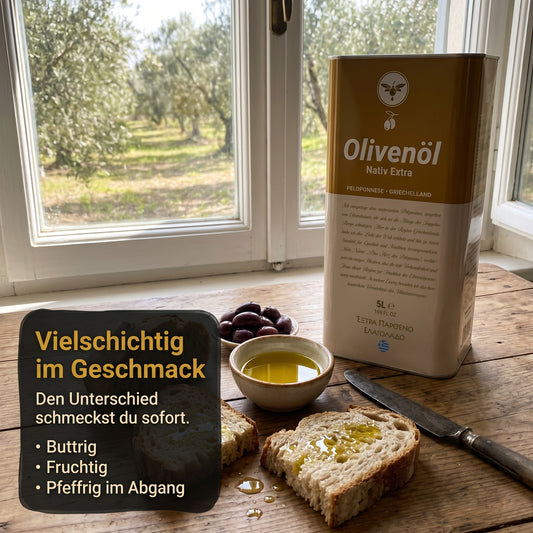
Not every "extra virgin" bottle is equal. Cheap, poorly stored or blended oils often have high acidity and few polyphenols, which lowers their smoke point and makes them less stable. Look for an oil that is genuinely extra virgin, harvested recently, low in acidity and stored in dark glass away from light and heat. A single-origin oil such as our Peloponnese extra virgin olive oil — hand-harvested, laboratory-tested for low acidity and rich in polyphenols — gives you both the everyday reliability to cook with and the character to finish a dish.
Frequently asked questions
Does heating extra virgin olive oil destroy its benefits?
Cooking does gradually reduce some of an oil's aroma compounds and antioxidants, as it does with any food, but a quality extra virgin olive oil retains much of its character and a good part of its polyphenols at normal cooking temperatures. To enjoy the oil at its most vivid, use it raw as a finishing drizzle; to cook, use it freely and without worry.
What temperature is too hot for olive oil?
The practical limit is the smoke point — roughly 190–207°C for a good extra virgin oil. If the oil is actively smoking, it is too hot: take the pan off the heat, let it cool slightly and lower the temperature. Staying below the smoke point keeps both the flavour and the oil in good shape.
Can I reuse olive oil after frying?
You can reuse it once or twice for similar foods if it was not overheated and you strain out any debris while it is still warm. Discard it if it darkens noticeably, smells rancid or turns sticky. Fresh oil always gives the cleanest flavour, so for the best results start with a good bottle each time.
Our product tip
Premium Olive Oil 500ml from the Peloponnese
Extra virgin, hand-harvested and laboratory-tested — low in acidity, rich in polyphenols, and dependable from the pan to the plate.
Shop Olive OilSo cook with confidence. Sauté, roast and fry with real extra virgin olive oil, and keep a little back to finish — that is how the Mediterranean has always done it. Natural, without additives, with a story behind every bottle. Pour La Vie.