Can You Cook with Extra Virgin Olive Oil? A Guide to Heat, Smoke Point and Frying
It is one of the most persistent myths in the kitchen: that extra virgin olive oil is only for drizzling, and that heating it is somehow a waste — or even dangerous. Many home cooks reach for a neutral oil the moment the pan gets hot, and save their good olive oil for salads. But is that caution actually justified?
The short answer is no. Extra virgin olive oil is not only safe to cook with, it is one of the most stable and rewarding fats you can heat. In this guide we clear up the confusion around smoke point and heat, and show you how to get the best from a genuine Greek extra virgin olive oil — whether you are gently sweating vegetables or shallow-frying.
What Is a Smoke Point, and Why Does It Matter?
The smoke point is the temperature at which an oil begins to break down and visibly smoke. Beyond it, an oil starts to degrade, its flavour turns acrid and it can produce unwanted compounds. Naturally, this made the smoke point the go-to measure for deciding which oils suit high heat.
Good extra virgin olive oil has a smoke point of roughly 190–210°C. To put that in perspective, most home cooking — sauteing, roasting, baking, pan-frying and shallow-frying — happens between 120°C and 190°C. In other words, everyday cooking sits comfortably below the smoke point of a quality olive oil.
Smoke Point Is Only Part of the Story
Here is what the smoke-point-obsessed advice tends to miss: the stability of an oil under heat depends far more on its chemical make-up than on its smoke point alone. Two qualities make extra virgin olive oil exceptionally resilient in the pan.
First, it is rich in monounsaturated fats, which resist oxidation much better than the polyunsaturated fats that dominate many seed oils. Second, it carries a natural payload of antioxidants and polyphenols — the very compounds responsible for that peppery tingle at the back of the throat. These act as built-in protectors, slowing down degradation when the oil is heated. Highly refined oils may boast a higher smoke point on paper, but they have been stripped of these protective compounds.
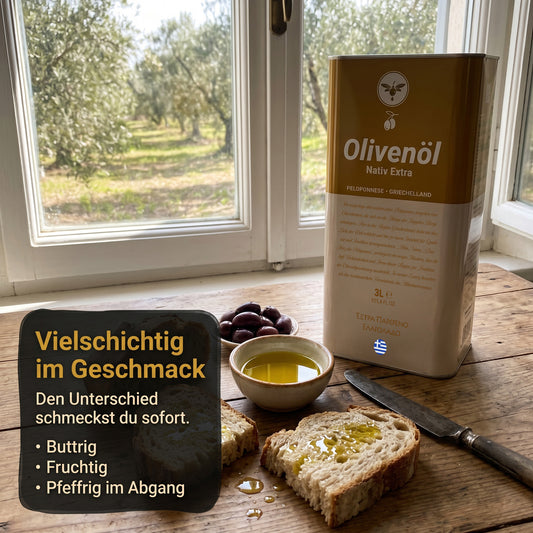
This is why quality matters so much. A fresh, polyphenol-rich oil such as our Peloponnese extra virgin olive oil is not merely surviving the heat — it is one of the better-equipped fats for it.
How to Cook with Extra Virgin Olive Oil
Sauteing and pan-frying
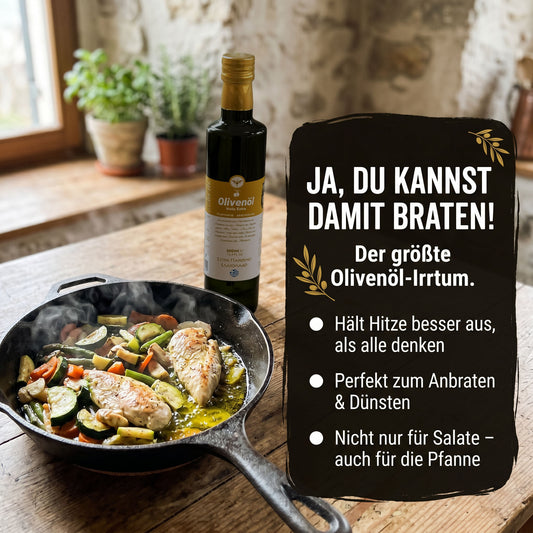
This is olive oil's home ground. Warm the oil over a medium heat, add your onions, garlic or vegetables, and let them soften and caramelise. The oil carries the flavours of whatever you cook and adds its own buttery, fruity depth. Countless Greek ladera dishes — vegetables slow-cooked in olive oil — are built entirely on this principle.
Roasting and baking
Toss vegetables in olive oil before roasting, or use it in cakes and breads. Oven temperatures for roasting vegetables (around 180–200°C) are well within range, and the oil keeps everything moist while adding flavour.
Shallow-frying
Olive oil is excellent for shallow-frying fritters, halloumi or courgette slices. Keep the temperature moderate, around 170–180°C, and you will get a crisp, golden result. For deep-frying large quantities, many cooks prefer a milder or lighter oil purely on cost, but there is nothing unsafe about frying in good olive oil — it is done across the Mediterranean every day.
Finishing
Do not forget the obvious: a raw drizzle over soup, grilled fish, bread or a finished dish is where a fine olive oil truly shines. Heat mellows the peppery notes, so keeping a little back for the finish lets you taste the oil at its most vivid.
Getting the Most from Your Olive Oil
A few simple habits protect both flavour and value. Avoid overheating the pan until the oil smokes — if it does, let it cool, wipe the pan and start again. Store your oil away from light and heat, sealed tightly, so it stays fresh. And match the oil to the task: use a generous hand for cooking, but reserve your very best, most peppery oil for finishing, where its character is unmissable.
Frequently Asked Questions
Is it safe to fry with extra virgin olive oil?
Yes. With a smoke point of roughly 190–210°C and a high proportion of stable monounsaturated fats, extra virgin olive oil handles normal frying temperatures well. Keep the heat moderate and avoid letting the oil smoke.
Does heating olive oil destroy its health benefits?
Some antioxidants diminish with heat, but studies show extra virgin olive oil retains much of its beneficial profile during typical cooking. Its monounsaturated fats remain intact, and it is still a far better choice than heavily refined oils.
Why does my olive oil taste bitter or peppery when raw?
That pepperiness is a good sign — it comes from polyphenols, the natural antioxidants of a fresh, high-quality oil. Gentle heat softens these notes, which is why the same oil tastes milder once cooked and bolder when drizzled raw.
Our Product Tip
Extra Virgin Olive Oil 500ml from the Peloponnese
Hand-harvested, naturally cloudy and rich in polyphenols — a versatile oil for cooking, frying and finishing.
Shop Olive OilSo go ahead — heat your good olive oil without a second thought. Chosen well and treated with a little care, extra virgin olive oil is the most versatile fat in the Mediterranean kitchen, at home in the pan just as much as on the plate. Pour La Vie.