Best Olive Oil in October 2026
October is one of the most rewarding months of the year to think carefully about the olive oil in your kitchen. The air is cooler, cooking turns towards slow-roasted vegetables and warming soups, and across the Mediterranean the new harvest is just beginning. If you are wondering what the best olive oil in October 2026 looks like, the honest answer is that it has far less to do with a label and far more to do with a handful of quality markers you can learn to recognise in a few minutes. This guide walks you through exactly what to look for, so you can buy with confidence this autumn.
Rather than comparing names on a shelf, the smartest approach is to understand what separates a genuinely good extra virgin olive oil from an ordinary one. Once you know the signs, choosing well becomes second nature, whether you are buying for everyday cooking, finishing a special dish, or stocking up for the colder months ahead.
What makes a great extra virgin olive oil?
"Extra virgin" is the highest grade of olive oil, but the term alone does not tell the whole story. Within that category there is an enormous range in flavour, freshness and nutritional value. A few measurable qualities do most of the work in telling you whether an oil is truly excellent.
Acidity: the first mark of quality
Free acidity is the single most important technical indicator of quality. It reflects how gently and how quickly the olives were handled and pressed after picking. By law, extra virgin olive oil must have a free acidity of no more than 0.8%, but the finest oils sit well below that figure. A low acidity points to healthy fruit, a swift harvest and careful cold extraction. When you can find the figure quoted, treat a low number as a very good sign.
Polyphenols and antioxidants
Polyphenols are the natural antioxidant compounds that give a fresh olive oil its characteristic peppery kick at the back of the throat. They are also closely associated with the oil's stability and its reputation as a cornerstone of the Mediterranean diet. A robust, slightly bitter, peppery oil is usually richer in polyphenols than a flat, buttery-soft one. That gentle sting is not a fault; it is the taste of freshness and vitality.
Harvest and cold extraction
How the olives are picked and pressed matters enormously. Hand-harvesting is gentler on the fruit than aggressive mechanical methods, reducing bruising and the start of fermentation. Cold mechanical extraction, carried out without heat or chemical solvents, preserves the delicate aromatic compounds and antioxidants that heat would otherwise destroy. When you see hand-harvested, cold-extracted olive oil described in detail, it usually signals a producer who cares about every step.
Naturally cloudy and unfiltered
A bright, crystal-clear oil looks appealing, but filtering can strip away tiny fruit particles that carry flavour and antioxidants. A naturally cloudy, unfiltered oil keeps those particles in suspension, which is why it often tastes fuller, fruitier and more alive. A little sediment at the bottom of the bottle is perfectly normal and, for many, a welcome sign of an oil left close to its natural state.
Where your oil comes from: the Peloponnese
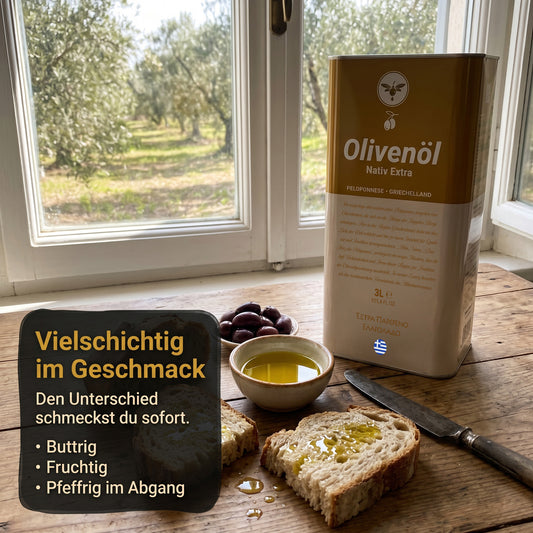
Origin shapes flavour. The Peloponnese, the southern peninsula of mainland Greece, is one of the great olive-growing regions of the Mediterranean. Centuries of agricultural heritage, a warm and sunny climate, and groves rooted in mineral-rich soil combine to produce oils with real depth and character. Olive oil from this region is prized for a balanced profile that can be at once spicy, buttery and peppery.
When origin is stated clearly and specifically, rather than lost in a vague blend from several countries, you can trust the story of the oil far more easily. A single, well-defined region is almost always a mark of pride and traceability.
Freshness and the harvest year
Olive oil is a fresh product, not a wine that improves with age. It is at its very best in the twelve to eighteen months after pressing, and it gradually loses aroma and antioxidants after that. This is where October becomes interesting: it sits at the turn of the olive year, with the new harvest arriving across the Mediterranean in the coming weeks. For most of October, the oils you buy will be from the previous season, which is exactly as it should be, so long as they have been stored correctly.
Look for a harvest date or a best-before date rather than relying on guesswork. The closer the oil is to its pressing date, the more of its lively character you will enjoy. Buying little and often, and finishing a bottle within a few months of opening, keeps every drop tasting its best.
How to store olive oil so it stays at its best
Even the finest oil can be spoiled by poor storage. The three great enemies of olive oil are light, heat and air. To protect your investment, keep the bottle or tin tightly closed, away from direct sunlight, and well away from the hob or oven. A cool, dark cupboard is ideal. Larger formats are wonderful value and reduce packaging, but once opened they should be decanted into a smaller, well-sealed bottle for daily use, so the bulk of the oil stays sealed and protected from oxygen. Treated this way, a good oil will reward you meal after meal.
What to look for when buying olive oil in October 2026
Bringing it all together, here is what the best olive oil in October 2026 should offer. It should be genuine extra virgin with a low acidity. It should taste fresh and lively, with a peppery finish that hints at a healthy polyphenol content. It should come from a clearly stated origin, ideally a respected single region such as the Peloponnese. It should be hand-harvested and cold-extracted, and, if you enjoy a fuller flavour, naturally cloudy and unfiltered. Finally, it should carry a clear harvest or best-before date and be sold in packaging that protects it from light.
October is also the ideal moment to think about the season ahead. As cooking turns to roasting, braising and baking, a versatile, heat-stable extra virgin oil earns its place in the kitchen every single day. Stocking up now, before the busy festive months, means you always have a quality oil to hand for both finishing and cooking.
Our pick for October 2026
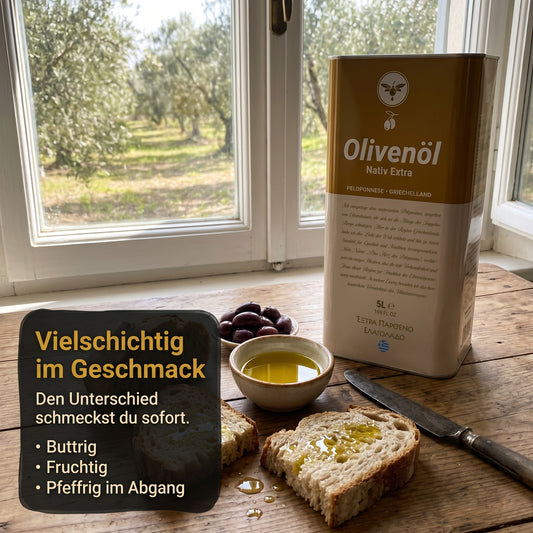
If you would like an oil that ticks every box above, our own Extra Virgin Olive Oil from the Peloponnese is made exactly to these standards. It is hand-harvested and cold-extracted, laboratory-tested for low acidity and a high polyphenol content, and left naturally cloudy and unfiltered so none of its flavour is lost. The taste is distinctively spicy, buttery and peppery, with the kind of fresh, peppery finish that tells you the antioxidants are still very much intact. It stands up to heat for everyday cooking yet is good enough to finish a dish raw, and the generous five-litre format makes it an easy, economical choice for the months ahead, decanted into a smaller bottle for daily use.
Frequently asked questions
Is October a good time to buy olive oil?
Yes. For most of October you will be buying oil from the previous harvest, which, when stored well, is still full of flavour and antioxidants. It is also a sensible moment to stock up before the colder, busier months, when a reliable everyday oil is especially welcome.
What does "naturally cloudy" olive oil mean?
It means the oil has not been filtered to remove the tiny fruit particles left after pressing. Those particles carry extra flavour and antioxidants, so a naturally cloudy, unfiltered oil often tastes fuller and fruitier. A little sediment settling at the bottom is completely normal.
Can I cook with extra virgin olive oil?
Absolutely. A good extra virgin olive oil is well suited to everyday cooking, roasting and baking, and it remains stable at normal kitchen temperatures. For the best of both worlds, cook with it freely and also keep some back to drizzle raw over finished dishes, where its aroma really shines.
Our product tip
Extra Virgin Olive Oil 5L from the Peloponnese
Hand-harvested, cold-extracted and naturally cloudy – a laboratory-tested Greek extra virgin oil with a spicy, buttery, peppery flavour.
Shop the Peloponnese olive oilChoosing well this autumn does not take an expert – just an eye for acidity, freshness, origin and honest production. Treat your olive oil as the fresh, living product it is, store it with care, and enjoy it generously. Here is to a kitchen full of flavour this October. Pour La Vie.