Best Olive Oil in August 2026: A Buyer's Guide to Extra Virgin Quality
“Which olive oil is best?” is one of the most common questions in any Mediterranean kitchen, and in August 2026 it is worth answering properly. The truth is that the best olive oil is not a single bottle on a shelf but the one that meets a handful of quality markers – and knowing those markers lets you judge any oil for yourself. This guide walks you through exactly what separates a truly good extra virgin olive oil from an ordinary one, so your next purchase is a confident one.
Rather than comparing labels, we will look at the things that actually determine quality: acidity, harvest and extraction, freshness, aroma and origin. Master these and you will never be misled by clever packaging again.
What “Extra Virgin” Really Means
Extra virgin is the highest grade of olive oil. To earn it, the oil must be produced purely by mechanical means – no heat and no chemical treatment – and it must have a free acidity of no more than 0.8%, along with no sensory defects. Everything below it (virgin, refined, or oils simply labelled “olive oil”) has been processed further or falls short on taste and chemistry. For flavour, nutrition and honesty, extra virgin is the only grade worth buying, so it is the baseline for everything that follows.
Acidity and Polyphenols: The Numbers That Matter
Free acidity is the single most useful quality figure. The legal ceiling for extra virgin is 0.8%, but the best oils come in far lower, often around 0.2 to 0.4%. A low figure signals healthy fruit that was pressed quickly and handled with care.
The second number to look for is polyphenol content. Polyphenols are the natural antioxidants that give good olive oil its lively, peppery kick at the back of the throat – that gentle catch is a sign of a fresh, robust oil, not a fault. Producers who test their oil in a laboratory and are willing to share the results are the ones worth trusting, because transparency is itself a quality marker.
Harvest and Extraction
How and when the olives are picked shapes the oil more than almost anything else. Fruit that is hand-harvested and pressed within hours, using cold mechanical extraction, keeps its aromas and antioxidants intact. Long delays between picking and pressing, or the use of heat to squeeze out more oil, dull the flavour and strip away the good compounds.
This is why small-batch, traditionally made oils so often taste more alive than mass-produced ones. It is not romance – it is chemistry and timing.
Filtered or Naturally Cloudy?
A bright, clear oil has been filtered; a naturally cloudy one has not. Unfiltered oil keeps tiny fragments of olive fruit and water in suspension, which many people prize for a fuller, fruitier, more textured taste. It is a matter of preference rather than quality, but a naturally cloudy, unfiltered extra virgin is often the most characterful choice and a good sign the oil has been minimally processed.
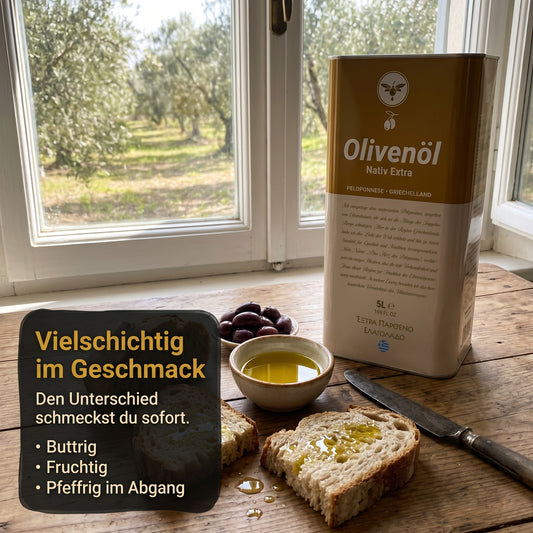
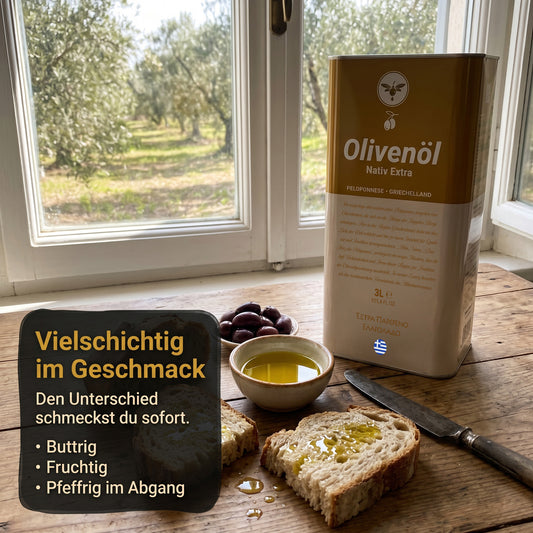
Our own extra virgin olive oil from the Peloponnese is hand-harvested, cold-extracted and left naturally cloudy and unfiltered, with a spicy, buttery and peppery character – a good example of what these markers look like in practice.
Why Origin Matters
Origin is not snobbery; it is traceability. An oil that names a specific region, rather than a vague blend of “oils from more than one country”, is one whose journey you can follow. The southern Greek peninsula of the Peloponnese is one of the Mediterranean's great olive regions, with old groves, a dry sunny climate and a long tradition of careful harvesting that together produce balanced, aromatic oils.
When a producer can tell you where the olives grew and how the oil was made, you are buying food with a story you can verify – the opposite of an anonymous bottle.
What to Look for in August
August sits in the long stretch between harvests, since olives are picked in autumn. That makes freshness especially worth checking now: look for a harvest date on the label rather than only a best-before date, and favour the most recent harvest you can find. Good oil is at its best within roughly 18 months of pressing, so an oil from the previous autumn is still excellent through late summer if it has been stored well.
Summer also brings heat and light, the two great enemies of olive oil. However good the oil, store it tightly closed in a cool, dark cupboard, away from the hob and the window, and it will keep its character far longer.
How to Taste an Olive Oil
You do not need to be an expert to judge an oil. Pour a little into a small glass, warm it in your cupped hand, and smell it: you want fresh, green, fruity aromas – cut grass, tomato leaf, artichoke – and nothing musty or greasy. Then sip it. A good extra virgin tastes fruity, turns pleasantly bitter, and finishes with that peppery tickle. Those three sensations – fruity, bitter, pungent – are the taste of quality and freshness.
Frequently Asked Questions
How can I tell if an olive oil is genuinely good?
Check for the extra virgin grade, a low free acidity (ideally well under 0.8%), a stated harvest date and a named region of origin. Then taste it: a fresh, fruity aroma with a bitter, peppery finish is the clearest sign of quality.
Does the best olive oil have to be clear?
No. Clarity simply tells you whether an oil has been filtered. Naturally cloudy, unfiltered oils are often fuller and fruitier in flavour, and cloudiness is a sign of minimal processing rather than a defect.
How should I store olive oil to keep it at its best?
Keep it tightly sealed in a cool, dark place away from heat and light. Avoid storing it beside the cooker or on a sunny worktop, and use it within about 18 months of the harvest date for the freshest flavour.
Our product tip
Extra Virgin Olive Oil from the Peloponnese
Hand-harvested, cold-extracted and naturally cloudy – low in acidity, rich in polyphenols and full of spicy, buttery character.
Shop the olive oilThe best olive oil in August 2026 is the one you can judge with your own eyes, nose and palate: extra virgin, low in acidity, freshly harvested, honestly sourced and full of life. Learn the markers once and every bottle becomes an open book. Choose an oil made with care, store it well, and taste the difference every day. Pour La Vie.