Aleppo Soap Ingredients: What Olive Oil and Laurel Oil Do for Your Skin
Pick up a bar of Aleppo soap and the first thing you notice is how little is in it. No long list of unpronounceable additives, no synthetic fragrance, no colourant — just olive oil, laurel oil, water and the alkali needed to turn oil into soap. That short ingredient list is the whole point, and it is also why so many people search for what, exactly, is inside this ancient bar and what those ingredients actually do.
This guide breaks down the two oils at the heart of traditional Aleppo soap, explains the role each one plays for your skin and hair, and shows you how the balance between them (the famous laurel oil percentage) changes the bar in your hand.
The short ingredient list that makes Aleppo soap different
Authentic Aleppo soap is made from four things: olive oil, laurel berry oil, water and a natural alkali (traditionally lye made from plant ash). During cooking and curing, the alkali reacts with the oils in a process called saponification and is fully used up, so it is not present in the finished, cured bar. What remains is a solid soap whose character comes almost entirely from the ratio of its two oils.
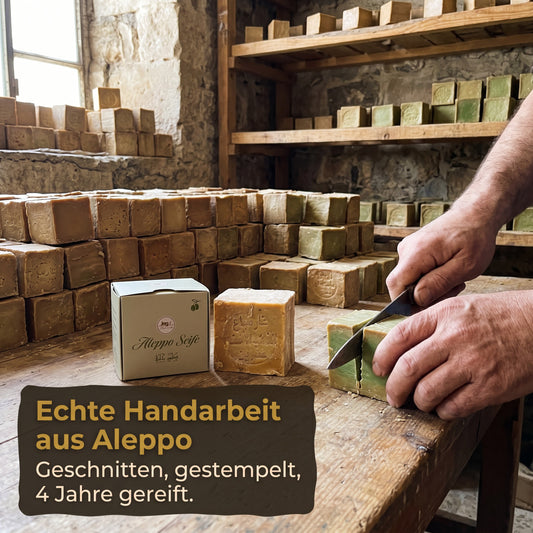
Because there is so little else in the recipe, the quality and proportion of those oils matter enormously. A bar like ours is made with 60% olive oil and 40% laurel oil, then cured for years before it is sold. Understanding what each oil brings helps you see why that matters.
Olive oil: the gentle, moisturising base
Olive oil is the foundation of every Aleppo bar and usually the larger share of the recipe. In soap-making terms it is prized for producing a mild, hard, long-lasting bar with a creamy rather than stripping lather. It is the reason Aleppo soap feels gentle on the skin instead of squeaky and tight.
Why olive oil suits so many skin types
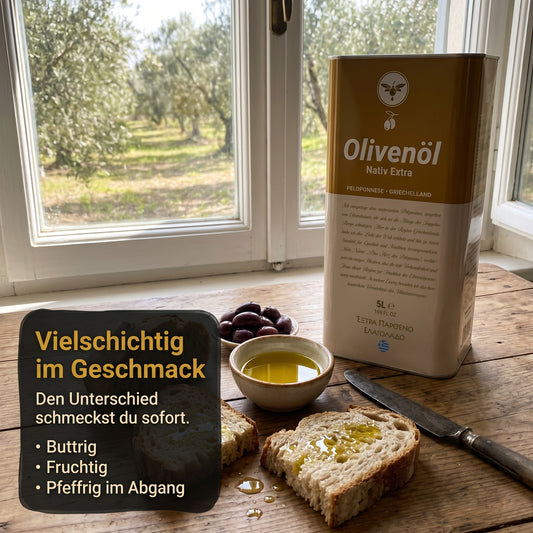
Olive-oil soap cleanses without aggressively removing the skin’s own oils, which is why it is a traditional choice for people who find ordinary soaps leave their skin feeling dry or taut. It rinses clean and leaves a soft, conditioned feel. The same quality that makes a good extra virgin olive oil a joy in the kitchen — a high level of natural, skin-friendly compounds — carries through into a kinder bar of soap.
What olive oil does not do
On its own, a pure olive-oil (Castile) soap can be quite soft and slow to lather. That is where the second oil comes in: laurel gives the bar structure, scent and its unmistakable character.
Laurel oil: the character ingredient
Laurel berry oil — pressed from the fruit of the bay laurel tree — is what sets Aleppo soap apart from every other olive-oil soap in the world. It is the more expensive, more aromatic ingredient, and its percentage is the single biggest factor in how a bar behaves and what it costs.
The scent and feel
Laurel oil gives Aleppo soap its distinctive earthy, herbal, slightly woody smell — a natural fragrance with nothing added. It also contributes to a richer lather and is traditionally associated with cleansing, clarifying properties, which is why higher-laurel bars are so popular for the face, hair and shaving.
How the laurel percentage changes the bar
Aleppo soaps are usually described by their laurel content, from around 20% up to 60% or more. As a rough guide, a lower laurel percentage (around 20–30%) makes a milder, more affordable everyday bar that many prefer for dry or sensitive skin. A higher percentage (40% and above) makes a more aromatic, more cleansing bar that suits oilier skin, the scalp and shaving. A 40% laurel bar, balanced with 60% olive oil, sits in a popular middle ground: characterful and clarifying, but still gentle enough for daily use on the body.
What is not in a real Aleppo bar
Part of the appeal is the list of things you will not find. Traditional Aleppo soap contains no synthetic fragrance, no artificial colour, no palm oil, no preservatives and no foaming agents such as SLS. It is naturally vegan and, because it is cut and cured the old way, every bar is a little different in shape and shade. If a soap sold as “Aleppo” lists a long paragraph of additives, it is not the traditional article.
How the two oils work together
The magic of Aleppo soap is really the partnership between its two oils. Olive oil brings mildness, moisture and a hard, economical bar; laurel oil brings fragrance, a fuller lather and its clarifying character. The ratio decides everything, and the long cure — ours rests for at least four years — lets the bar harden and mellow so that even a higher-laurel soap feels smooth rather than harsh.
How to choose your Aleppo soap
Start with your skin and your intended use. For gentle everyday washing of dry or reactive skin, a moderate laurel percentage is a safe, comfortable choice. For hair, scalp, shaving or oilier skin, reach for a higher-laurel bar. Whatever you choose, look for a genuinely short ingredient list, a long cure, and honest labelling of the olive-to-laurel ratio. A well-made 60% olive / 40% laurel bar is a versatile all-rounder that works for face, body, hair and even hand-washing delicate laundry.
Frequently asked questions
What is Aleppo soap actually made of?
Traditional Aleppo soap is made from olive oil, laurel berry oil, water and a natural alkali. The alkali is consumed during saponification, so the finished, cured bar is essentially just the two oils in soap form — with no added fragrance, colour or preservatives.
Is a higher laurel oil percentage better?
Not necessarily — it depends on your skin and how you want to use the bar. Higher-laurel soaps are more aromatic and more clarifying, which suits hair, shaving and oilier skin, while lower-laurel bars are milder and often preferred for dry or sensitive skin. A 40% laurel bar is a popular balance between the two.
Is Aleppo soap suitable for the whole family?
Its simple, additive-free recipe is one reason Aleppo soap has been used for generations for face, body and hair. As with any new cosmetic, if you have very reactive skin it is sensible to patch-test first and choose a milder, lower-laurel or well-cured bar.
Our product tip
Aleppo Soap — 60% Olive Oil & 40% Laurel Oil
Traditionally hand-cut and cured for at least four years, with just two oils and nothing added — for face, body and hair.
Shop Aleppo soapPour La Vie
The beauty of Aleppo soap is its honesty: two oils, patiently cured, doing exactly what they have done for centuries. Once you understand what olive oil and laurel oil each contribute, choosing the right bar becomes simple — and you can wash your face, body and hair with something you can read the label of in a single breath. Pure, simple, timeless. Pour La Vie.