Aleppo Soap for the Face: How to Cleanse Oily and Sensitive Skin
Aleppo soap has been used on skin for centuries, but one question comes up again and again: can you really wash your face with it? The short answer is yes – and for many people with oily or combination skin, a genuine Aleppo soap made from olive oil and laurel oil becomes a simple, no-nonsense part of their daily routine. This guide explains how to use it on the face, who it suits, and how to get the best results without stripping your skin.
Unlike most modern facial cleansers, traditional Aleppo soap contains just a handful of ingredients: olive oil, laurel (bay) oil, water and the natural alkali used to turn oils into soap. There are no synthetic fragrances, no colourants and no foaming agents. For anyone trying to simplify their skincare and cut down on additives, that short ingredient list is a large part of the appeal.
Is Aleppo soap suitable for the face?
Aleppo soap is a true soap, which means it is naturally alkaline. Healthy skin is slightly acidic, so any soap will temporarily shift the skin’s surface pH. The difference with a well-aged Aleppo bar is the high proportion of olive oil, which is gentle and helps the soap feel less drying than a harsh, cheap bar. Many people with oily and combination skin find it cleanses effectively without the tight, squeaky feeling that stronger cleansers can leave behind.
That said, skin is individual. If your skin is very dry, mature or reactive, a soap-based cleanser may feel too much for daily use on the face – in that case, a few times a week or on the body only may suit you better. The best approach is to start slowly and pay attention to how your skin responds.
Which skin types benefit most
Oily and combination skin
This is where Aleppo soap tends to shine. Oily and combination skin often copes well with a gentle cleansing soap that removes excess sebum and the day’s grime without a heavy residue. The laurel oil in the bar is what gives Aleppo soap its characteristic earthy scent and its reputation as a clarifying cleanser.
Normal skin
Normal skin usually tolerates Aleppo soap comfortably. A higher laurel content gives a deeper clean, while a lower laurel content (with more olive oil) is milder and a good place to start.
Sensitive skin
Because it is free from synthetic fragrance and dyes, many people with sensitive skin prefer it to heavily perfumed products. Even so, laurel oil is an active botanical, so a patch test is sensible before you use it on your face. Apply a little lather to your inner forearm and wait 24 hours before committing to a full facial routine.
How much laurel oil should you choose?
The laurel oil percentage is the single biggest factor in how an Aleppo bar behaves. A soap with a lower laurel share, such as a 40% laurel and 60% olive oil blend, is milder and well suited to the face and to first-time users. Higher laurel percentages give a more intensive, clarifying wash that some prefer for the body, scalp or particularly oily skin. If in doubt, begin with a balanced bar and adjust from there.
Our product tip
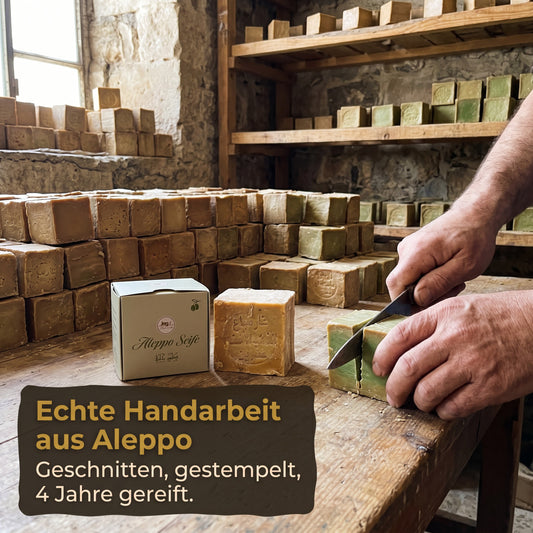
Aleppo Soap – 40% Laurel Oil & 60% Olive Oil
Traditionally hand-cut and matured for four years – a balanced, additive-free bar that is gentle enough for the face.
Shop Aleppo SoapA simple Aleppo soap face-cleansing routine
- Wet your face with lukewarm water. Very hot water can leave skin feeling tight, so keep it comfortably warm.
- Build a lather. Rub the Aleppo soap between damp hands, or work it onto a soft cloth, until you have a light, creamy foam. You do not need much.
- Massage gently. Using your fingertips, massage the lather over your face in small circles for around 20 to 30 seconds, avoiding the eye area.
- Rinse thoroughly. Splash with plenty of lukewarm water until no residue remains, then pat dry with a clean towel rather than rubbing.
- Moisturise. Because soap can leave skin feeling slightly tight at first, follow with a light moisturiser or a few drops of a facial oil to keep the skin’s barrier comfortable.
Start by using it once a day, in the evening, to remove the day’s build-up. If your skin stays comfortable, you can move to morning and night. If it feels dry, cut back to a few times a week.
Common mistakes to avoid
The most frequent misstep is over-cleansing. More washing does not mean cleaner skin; it usually means a disrupted barrier and, ironically, more oil as the skin overcompensates. Let a small amount of lather do the work. The second mistake is skipping moisturiser afterwards – even oily skin benefits from a light hydrator to restore comfort. Finally, always let the bar dry out between uses. A soap that sits in a pool of water turns soft and wears out quickly.
How to store your bar so it lasts
Aleppo soap is dense and long-lasting, but only if it can dry properly. Keep it on a well-draining soap dish away from the direct spray of the shower, and let air circulate around it. Stored this way, a single bar can last a surprisingly long time. If you buy several at once, keep the spares in a cool, dry cupboard where they will continue to harden and mellow.
Frequently asked questions
Can Aleppo soap be used on acne-prone skin?
Many people with oily, blemish-prone skin like Aleppo soap because it cleanses without synthetic additives. It is not a medical treatment, so it will not replace advice or products recommended by a dermatologist, but as a gentle daily cleanser it suits a lot of oilier skin types. Patch test first and see how your skin responds.
Will Aleppo soap dry out my face?
It can feel slightly tight straight after washing because it is a true soap. Choosing a bar with more olive oil, using lukewarm water and applying a moisturiser afterwards all help keep skin comfortable. If dryness persists, reduce how often you use it.
How is Aleppo soap different from ordinary soap?
Traditional Aleppo soap is made from olive oil and laurel oil, matured for years, and contains no synthetic fragrance, colour or foaming agents. That simplicity, and the natural laurel oil, are what set it apart from most mass-produced bars.
Washing your face with Aleppo soap is about going back to basics: a pure, additive-free bar, a gentle routine and a little patience while your skin adjusts. Start slowly, listen to your skin, and give it the traditional care it was made for. Pour La Vie.