Aleppo Soap for Laundry: A Natural Way to Hand-Wash and Treat Stains
Most of us know Aleppo soap as something for the shower — a mild bar for face, body and hair. Far fewer people know that the very same bar has been used for generations to wash clothes by hand. Long before boxed detergents arrived, a simple block of olive and laurel oil soap was what many Mediterranean households reached for to clean a wool jumper, rinse out a silk scarf or lift a fresh stain.
It still works beautifully today, and it fits neatly with a slower, lower-waste way of doing laundry. If you have delicate pieces that the machine chews up, or you simply want a natural, additive-free alternative to bottles of liquid detergent, a good Aleppo bar is worth keeping by the sink. Here is how to use it well, what it is good at, and where its limits lie.
Why Aleppo soap works on laundry
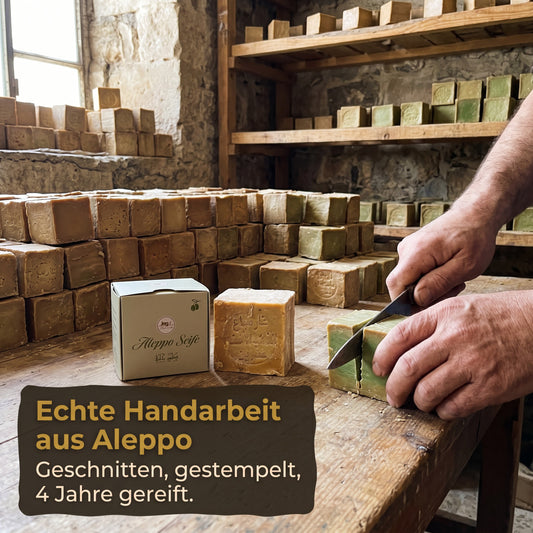
Traditional Aleppo soap is made from just three things: olive oil, laurel (bay) oil and water, saponified and then cured for years. That simplicity is exactly why it suits fabric care. There are no synthetic fragrances, optical brighteners, enzymes or fillers to leave residue in the fibres or to irritate skin that later touches the cloth.
Olive oil soap produces a soft, gentle lather that loosens everyday grime and body oils without the harsh, stripping action of a strong modern detergent. That gentleness is the whole point when you are dealing with natural fibres such as wool and silk, which can felt, shrink or lose their sheen when treated too aggressively. The laurel oil adds its own mild cleansing character and the faintly herbal, earthy scent that Aleppo soap is known for — a world away from the heavy perfume of conventional washing products. Our Aleppo soap with 60% olive oil and 40% laurel oil is a true multi-tasker in this respect: one bar for skin, hair and, yes, laundry.
What it is good for
An Aleppo bar is not meant to replace a full machine wash for a basket of heavily soiled towels and bed linen. Where it shines is the gentler, more targeted end of laundry — the jobs where a machine and a strong detergent are overkill or even risky.
Use it to hand-wash delicates: wool and cashmere knits, silk blouses and scarves, lingerie, fine cotton and merino base layers. It is excellent for freshening items that are lightly worn rather than truly dirty, such as a jumper that just needs airing and a quick refresh. And it is genuinely useful as a spot and stain treatment — rubbing a damp bar directly onto a collar, cuff or a fresh food mark before washing, much as you would use a bar of traditional gall or curd soap.
How to hand-wash with Aleppo soap
The method is simple and hasn't changed in centuries. Set aside ten minutes and you will get a careful, thorough clean.
- Fill a basin or sink with lukewarm water — never hot, especially for wool and silk, as heat is what causes shrinking and felting. Aim for water that feels barely warm to the hand.
- Create the soap solution. Swish the bar through the water a few times to build a light lather, or rub a little soap onto a soft cloth and work it in. You need far less than you think; the water should feel silky, not thick with foam.
- Submerge the garment and gently move it through the water. Lightly squeeze the suds through the fabric rather than rubbing, wringing or twisting, which stresses the fibres. Give stained or grimy areas a little extra attention with your fingertips.
- Let it soak for five to ten minutes if the piece needs it, then rinse in clean, cool water until the water runs clear and no soap remains.
- Press — do not wring — the excess water out. Lay the garment flat on a clean towel, roll the towel up to draw out more moisture, then reshape and dry flat, away from direct heat and sunlight.
Treating stains with a bar
For a targeted stain, work on it before the item goes into any wash. Dampen the fabric and the Aleppo soap bar, then rub the bar directly over the mark until you have worked a little soap into the fibres. Let it sit for ten to fifteen minutes so the soap can loosen the stain, then rinse or launder as usual.
Fresh marks are far easier than set-in ones, so treat spills as soon as you can. Always test on an inconspicuous area first — an inside seam or hem — particularly on delicate or brightly dyed fabrics, and use cool water on anything protein-based such as food or grass, since hot water can fix those stains permanently.
Good to know before you start
A few sensible limits keep this from going wrong. Aleppo soap, like all true soaps, does not love very hard water — in hard-water areas it can leave a faint film, so a thorough cool rinse (a splash of vinegar in the final rinse helps) keeps fabrics soft. Keep it away from hot washes on wool and silk, and don't scrub or wring those fibres.
It is also best kept to hand-washing rather than dropped into a washing machine drawer, where a bar simply isn't designed to dose evenly. And as with any cleaning method, it will not perform miracles on old, set-in or oil-heavy industrial stains. Think of it as the gentle, natural option for the clothes you care about most — not a heavy-duty degreaser. Between washes, let the bar dry out fully on a rack or dish so it lasts; a well-cured Aleppo soap can serve you for a very long time.
Frequently asked questions
Can I use Aleppo soap in my washing machine?
It is really designed for hand-washing, where you can control the water and dose. A solid bar does not dissolve or distribute reliably in a machine drum. If you want a machine option, some people grate a little soap into hot water to make a paste first, but for delicates the basin method gives you far more control and a gentler result.
Is Aleppo soap safe for wool and silk?
Yes, and that is one of its great strengths. The mild, olive-oil-based lather cleans without the harsh action that can felt wool or dull silk. The key is cool water, a gentle squeezing motion instead of rubbing or wringing, and drying the piece flat. Always test on a hidden area first.
Will it leave a smell on my clothes?
Only a very faint, natural, herbal-earthy note from the laurel oil, which fades as the item dries. Unlike conventional detergents there are no synthetic perfumes, so clothes end up smelling clean and neutral rather than heavily scented — which many people much prefer.
Our product tip
Aleppo Soap — 60% Olive Oil & 40% Laurel Oil
One traditionally cut, additive-free bar for face, body, hair and gentle laundry care.
Shop the Aleppo soapThere is something quietly satisfying about caring for your favourite clothes with a single, honest bar of soap — no bottles, no additives, no waste. It is the same simplicity that has kept Aleppo soap in Mediterranean homes for centuries, now working just as well beside your sink as in your bathroom. Natural, gentle and made to last. Pour La Vie.