Aleppo Soap for Hair: How to Use It as a Natural Shampoo Bar
Aleppo soap has washed skin and hair across the eastern Mediterranean for centuries, long before the word “shampoo” existed. Made from just olive oil, laurel (bay) oil, water and a natural alkali, this humble olive-green bar is one of the oldest cleansers in the world — and using Aleppo soap for hair is a simple, low-waste way to return to that tradition.
But washing your hair with a soap bar is not quite the same as reaching for a bottle of shampoo. Do it well and you get clean, soft, naturally cared-for hair with almost no packaging. Skip the one crucial step, and you may wonder what went wrong. Here is everything you need to know.
Can you really wash your hair with Aleppo soap?
Yes — and people have done so for generations. Aleppo soap is a true soap, which means it lifts away oil, dust and product build-up from hair and scalp using natural fatty acids rather than synthetic detergents such as sulphates. For many people that means a gentler wash that does not strip the hair as aggressively as some conventional shampoos.
It suits a wide range of hair types, but it behaves differently from a liquid shampoo, and your local water can affect the result. Understanding why helps you get it right from the very first wash.
Why olive and laurel oil suit hair and scalp
The character of Aleppo soap comes from its two oils. Olive oil is rich, mild and conditioning — it cleanses without leaving the scalp tight and dry. Laurel (bay laurel) oil gives the soap its distinctive earthy scent and its clarifying, slightly astringent quality, which many people find helpful for an oilier scalp or as a natural clarifying wash.
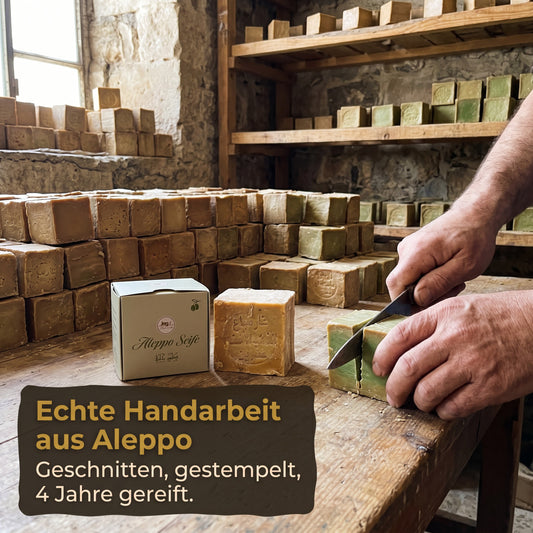
Our Aleppo soap is made with 60% olive oil and 40% laurel oil and matured for four years, with nothing else added — no synthetic fragrance, colour or preservatives. That purity is exactly why so many people turn to it when they want to simplify their routine.
How much laurel oil is right for hair?
Laurel oil is the part of the recipe that varies most between bars, usually from around 20% up to 60% or more. As a rough guide, a lower laurel percentage is milder and better suited to dry, fine or sensitive scalps, while a higher percentage is more clarifying and tends to suit oilier hair and scalp. A balanced 40% bar, like ours, is a sensible middle ground for most people starting out — clarifying enough to feel genuinely clean, yet mild enough for regular use.
How to wash your hair with Aleppo soap
- Wet your hair thoroughly. Warm water helps the soap lather and lets the hair clean more easily.
- Build a lather. Either rub the wet bar directly along your scalp and down the length of your hair a few times, or work up a lather in your hands first and apply that. Warm, soft water lathers far better than cold or hard water.
- Massage the scalp. Using your fingertips, massage gently for 30–60 seconds, focusing on the scalp where oil and build-up gather rather than scrubbing the ends.
- Rinse really well. Rinse for longer than you think you need to — any soap left behind is what causes a waxy, heavy feel. Keep going until the water runs clear and your hair feels clean, not slippery.
- Follow with an acid rinse. This is the step that makes or breaks soap-washed hair (see below).
- Dry and style as usual. Let the bar dry out between washes on a well-drained dish so it lasts longer.
The acid rinse: the step you cannot skip
Soap is naturally alkaline, and alkalinity leaves the hair cuticle slightly raised, which can feel rough, tangly or dull — especially in hard-water areas. A simple acidic rinse closes the cuticle again and brings back softness and shine.
To make one, stir one tablespoon of apple cider vinegar (or plain white vinegar, or lemon juice) into around 500 ml of water. After rinsing out the soap, pour it slowly over your hair, leave it for a few seconds, then rinse with cool water — or simply leave it in, as the smell fades once your hair is dry. This one habit is often the difference between “I don’t get it” and “I’ll never go back.”
The transition period: what to expect
If you are switching from conventional shampoo, give your hair a couple of weeks to adjust. Some people find their scalp rebalances its oil production after years of stronger detergents, and there can be a short “getting used to it” phase. Using the acid rinse at every wash, not overloading the bar, and making sure your rinse water is warm and, if possible, soft will all smooth the transition. If your water is very hard, an occasional stronger acid rinse helps keep build-up at bay.
Who should try it — and who might not
Aleppo soap for hair tends to suit people with normal to oily hair, anyone reducing plastic and synthetic ingredients, and those who like a pared-back, natural routine. It is also wonderfully travel-friendly: one bar washes hair, body and hands.
It can be less straightforward for very long, chemically treated, or very dry and curly hair, which may prefer the slip of a conditioning shampoo — though plenty of curly-hair users get on well once they master the acid rinse. As with any new product, if you have a sensitive scalp, patch test first and stop if it does not agree with you. Aleppo soap is a gentle cleanser and a natural care ritual, not a treatment for scalp conditions.
Frequently asked questions
How often should I wash my hair with Aleppo soap?
Keep to the rhythm that already suits your hair — every two to three days for most people. Because it is a gentle wash, you do not need to do it daily; over-washing any hair can leave the scalp working overtime.
Do I still need conditioner?
Often the acid rinse is enough to leave hair soft and easy to comb. If your ends are dry, you can still use a conditioner or smooth a little olive oil through the lengths — but many people find they use far less than before.
Why does my hair feel waxy after using Aleppo soap?
Two usual causes: soap that was not fully rinsed out, or hard water reacting with the soap. Rinse for longer, and always finish with an acid rinse. If it persists, your water is likely hard, and a slightly stronger vinegar rinse once a week will clear the build-up.
Our product tip
Aleppo Soap – 40% Laurel Oil & 60% Olive Oil (200 g)
A traditional bar matured for four years — cleanses hair and scalp gently, with no synthetic additives.
Shop the Aleppo soapWashing your hair with Aleppo soap is a small return to something older and simpler — one honest bar, no long ingredient list, and no plastic bottle to throw away. Give it two weeks and the acid rinse its due, and you may find your hair has never felt cleaner or more cared for. That is the Jegit promise: natural, without additives, with a story behind every bar. Pour La Vie.