Aleppo Soap Benefits: What This Traditional Soap Really Does for Skin and Hair
Aleppo soap has been made the same way for centuries: olive oil and laurel oil, cooked slowly, poured out to set, hand-cut and left to cure for years before it ever reaches a bathroom. In a market full of brightly coloured bars and long ingredient lists, its appeal is exactly the opposite — it is honest, minimal and gentle. But what does Aleppo soap actually do for your skin and hair, and why do so many people who try it never go back? This guide explains the real, everyday benefits without the hype.
A quick note before we start: Aleppo soap is a natural cosmetic, not a medicine. Nothing here is a promise to treat or cure a skin condition. What we can talk about honestly is how a pure, well-cured soap behaves on the skin, why its two simple ingredients matter, and who tends to get on well with it.
What Is Aleppo Soap Made Of?
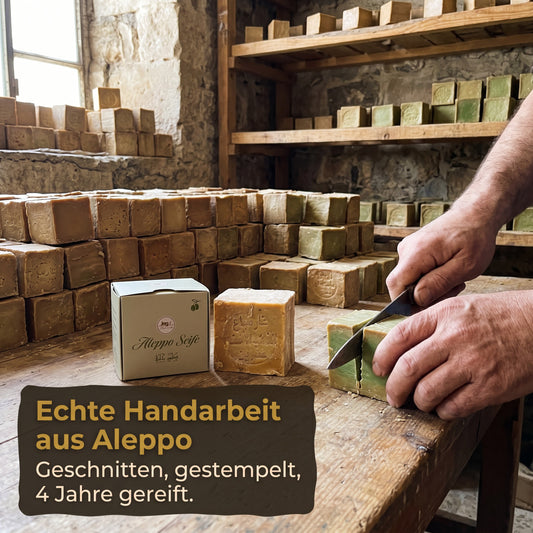
Traditional Aleppo soap contains just three things: olive oil, laurel (bay) oil, and the water and natural alkali needed to turn them into soap. There are no synthetic fragrances, no dyes, no palm oil and no hardening agents. Our Aleppo soap with 60% olive oil and 40% laurel oil is hand-cut and matured for four years, which is what gives it that mellow, almost velvety lather.
The olive oil is the gentle, moisturising base. The laurel oil is the prized part — it is what gives Aleppo soap its distinctive earthy scent and its reputation for being suited to demanding skin. The higher the laurel content, the richer and more cleansing the bar, which is why the laurel percentage is worth paying attention to when you buy.
The Main Benefits of Aleppo Soap
Gentle, thorough cleansing
Because it is made only from plant oils, Aleppo soap cleans without the harsh, squeaky, stripped feeling that many conventional bars leave behind. It lifts away dirt, sweat and excess oil while leaving the skin feeling comfortable rather than tight. For a lot of people that alone is the reason to switch.
A moisturising feel for dry skin
The high olive-oil content means the bar is naturally rich. Rather than drawing moisture out of the skin, it tends to leave a soft, conditioned feeling after rinsing. If your skin usually feels parched after washing, a pure olive-and-laurel soap can be a noticeable improvement, especially in winter.
A simple choice for sensitive skin
Sensitive skin often reacts to synthetic fragrance, colourants and preservatives. Aleppo soap contains none of these, which is why people with easily irritated or reactive skin are frequently drawn to it. As with any new product, it is sensible to patch-test first, but the short, natural ingredient list is a big part of the appeal.
One bar for face, body and hair
Aleppo soap is genuinely multi-purpose. The same bar can cleanse your face, wash your body and even work as a shampoo bar for many hair types. That versatility makes it a favourite for anyone simplifying their routine or packing light for travel.
Naturally low-waste and long-lasting
A cured Aleppo bar is dense and hard, so it lasts a long time and comes with little or no plastic packaging. Swapping several bottled products for one bar is an easy, satisfying step towards a lower-waste bathroom — and it is kinder to your shelf space too.
How to Use Aleppo Soap
Using it is straightforward. Wet the bar and your skin, work up a lather in your hands or directly on the skin, massage gently, and rinse with warm water. On the face, a few seconds of lather is plenty. As a shampoo bar, rub it between wet palms and apply the lather to your scalp, then rinse thoroughly; some people like to follow with a simple acidic rinse to smooth the hair.
The single most important habit is storage. Keep the bar on a well-drained dish, away from standing water, so it can dry fully between uses. A bar that dries out properly stays firm and lasts far longer than one left sitting in a puddle.
Who Is Aleppo Soap Best For?
Aleppo soap suits people who want to strip their routine back to essentials, anyone whose skin feels tight or uncomfortable after ordinary soap, and those looking to cut down on packaging and synthetic ingredients. A higher laurel percentage tends to appeal to oilier or more demanding skin, while a more olive-heavy bar is lovely for dry or delicate skin. If you are unsure, start with a balanced bar and see how your skin responds over a couple of weeks.
Frequently Asked Questions
What is Aleppo soap actually good for?
It is a gentle, all-in-one cleanser for face, body and hair, valued for washing thoroughly without leaving skin feeling stripped. Its short, natural ingredient list makes it a popular choice for people who prefer additive-free cosmetics and a lower-waste routine.
Can I use Aleppo soap every day?
Yes, most people use it daily on the body and hands. On the face, start once a day and see how your skin feels; adjust the frequency to suit you. As with any soap, let your skin guide you and moisturise afterwards if you like.
Why does my Aleppo soap look green inside and brown outside?
That colour change is completely normal and a sign of proper curing. Fresh Aleppo soap is green from the olive and laurel oils; as it matures in the air over years, the outside oxidises to a golden-brown, while the inside stays green. It is a hallmark of an authentic, well-aged bar.
Our product tip
Aleppo Soap — 60% Olive Oil & 40% Laurel Oil
Hand-cut and matured for four years, for a mellow lather that cleanses without stripping.
Shop the Aleppo soapThe beauty of Aleppo soap is that its benefits come from what it leaves out as much as what it puts in: two plant oils, time, and nothing else. For skin and hair that simply want to be cleaned and cared for — gently, honestly, day after day — it is hard to beat. That is our promise of Pour La Vie: pure care, made to last.