Which Olive Oil for Frying? The Complete Guide
It stubbornly persists: "You shouldn't fry with olive oil." Is that true? The short answer: you can – if you choose the right oil and follow a few rules. In this guide you'll learn which olive oil is suitable for frying, why the smoke point matters, and how to store your oil correctly.
Can you actually fry with olive oil?
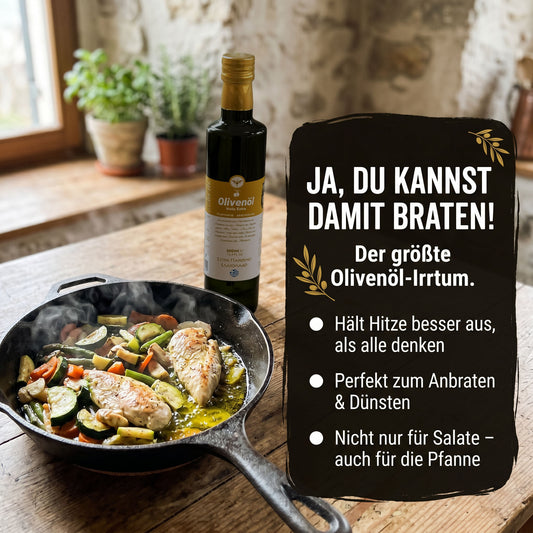
Yes. The often-quoted myth is based on the smoke point – the temperature at which an oil starts to smoke and compounds break down. Good extra virgin olive oil has a smoke point of around 180–190 °C, with high-quality oils sometimes higher. For normal pan-frying, braising and sautéing that's perfectly sufficient – everyday cooking rarely exceeds those temperatures.
What's also crucial: olive oil is rich in monounsaturated fatty acids and antioxidants, which make it comparatively heat-stable. Studies show that extra virgin olive oil stays more stable when heated than many other oils.
What matters in a frying olive oil
Three factors decide whether an olive oil is good for frying:
- Quality: Extra virgin olive oil is the highest grade and contains the most protective antioxidants.
- Freshness: The fresher the oil, the more stable it is when heated.
- Acidity: A low acidity (below 0.8%, often well below for premium oils) indicates high quality and good heat resistance.
For high temperatures like searing or deep-frying, some reach for refined olive oil with a higher smoke point. But for most dishes – vegetables, fish, meat in the pan – good extra virgin olive oil is the better choice for both flavour and health.
Frying, steaming, finishing: which oil for what?
- Gentle frying and steaming: Extra virgin olive oil – the aroma is preserved.
- Searing / deep-frying: Oil with a higher smoke point, or use sparingly and not too hot.
- Cold finishing (salads, dips, bread): Extra virgin olive oil shines with full, fruity aroma – ideally unfiltered.
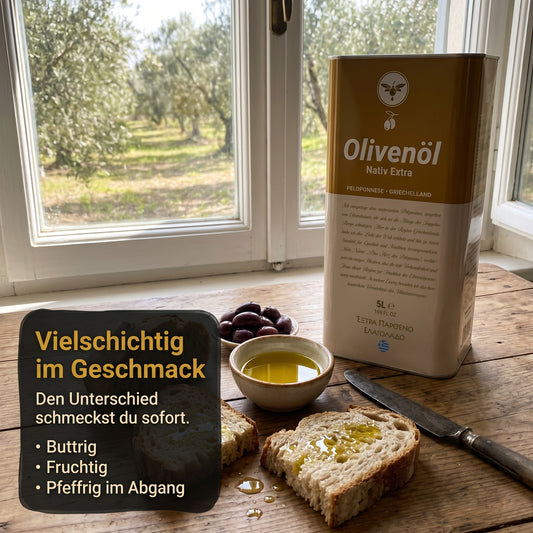
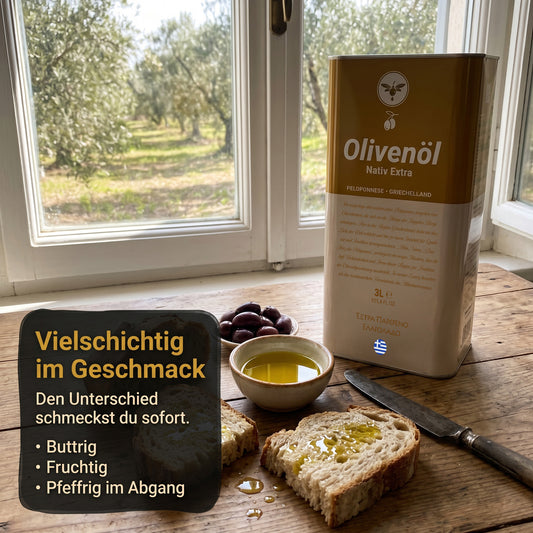
An unfiltered, hand-harvested olive oil like our Extra Virgin Olive Oil from the Peloponnese brings a spicy-buttery, slightly peppery character that elevates both warm and cold dishes.
How long does olive oil keep?
Olive oil is not wine – it doesn't get better with time; it loses aroma and valuable compounds. Unopened, good olive oil keeps for about 18–24 months from bottling. Once opened, use it within 2–3 months, as oxygen accelerates oxidation.
- Store in the dark: Light is the biggest enemy. A dark bottle or cupboard protects it.
- Cool, but not in the fridge: 14–18 °C is ideal. Right next to the stove is the wrong spot.
- Seal well: Always screw the cap tight so as little air as possible gets in.
How to recognise rancid oil: it smells musty or "like old nuts" and tastes harsh and unpleasant. Then it should be discarded.
Frequently asked questions
Which olive oil is best for frying?
A fresh extra virgin olive oil with low acidity. For very high temperatures, refined olive oil works.
Is frying with olive oil unhealthy?
No, as long as you don't exceed the smoke point. Extra virgin olive oil is actually comparatively heat-stable.
How long does opened olive oil last?
About 2–3 months when stored dark, cool and well sealed.
Our product tip
Extra Virgin Olive Oil from the Peloponnese
Hand-harvested, unfiltered and naturally cloudy – spicy, buttery and peppery in flavour.
Shop olive oilDiscover our hand-harvested, unfiltered Extra Virgin Olive Oil from the Peloponnese – Pour La Vie.