Liquid Aleppo Soap: What It Is and How to Make Your Own at Home
Search for "liquid Aleppo soap" and you'll find a confusing mix of products, most of which have little to do with the traditional bar. Genuine Aleppo soap is, by definition, a solid soap: it is saponified from olive oil and laurel berry oil, then cured as a hard bar for months or years. There is no traditional liquid version. What you'll usually find sold as "liquid Aleppo soap" is either a diluted, reformulated liquid wash that borrows the name, or simply the idea of grating and dissolving a real bar yourself.
The second option is the only way to get an actual liquid soap that still contains the same ingredients as traditional Aleppo soap: olive oil, laurel berry oil, water, and sodium hydroxide used in the original saponification, nothing else. This guide explains why liquid Aleppo soap is so rare, what to watch for if you buy one ready-made, and how to make your own gentle liquid soap from a genuine cured bar in about twenty minutes.
Why There's No Traditional Liquid Aleppo Soap
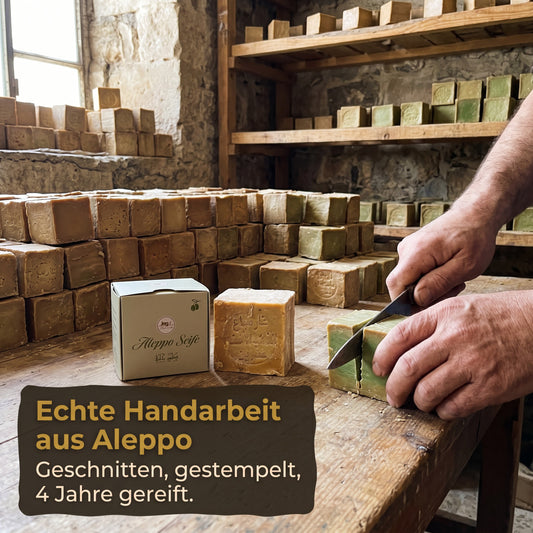
Aleppo soap has been made the same way for centuries in and around Aleppo, Syria: olive oil and laurel berry oil are cooked with water and lye, poured into large sheets, cut into blocks while still soft, then stamped and left to cure for at least nine months to four years. Curing is what makes Aleppo soap what it is. As the bar ages, the sharp smell of laurel oil mellows, excess moisture evaporates, and the soap becomes harder, milder and longer-lasting.
A liquid soap cannot go through this curing process. Liquid soaps are typically made with potassium hydroxide instead of sodium hydroxide, which produces a softer, water-soluble soap rather than a hard bar. That's a fundamentally different formulation, not simply a melted-down version of the original. So when you see "liquid Aleppo soap" for sale, it is worth asking what it actually contains, since it usually is not the same recipe that has defined Aleppo soap for generations.
What's Often Sold Under the Name
Reformulated liquid washes
Many products labelled "liquid Aleppo soap" are liquid cleansers with laurel oil or olive oil added to the formula, often alongside surfactants, preservatives and fragrance. These can still be pleasant to use, but they are a different product with a different ingredient list, not a liquid form of the traditional bar.
Diluted bar soap
Some brands simply dissolve their own bar soap in water and bottle the result. This keeps things closer to the original, though the exact process and any added stabilisers vary from brand to brand.
DIY liquid soap
The most transparent option is making it yourself from a bar you already trust. You control exactly what goes in, and it takes very little equipment.
How to Make Liquid Soap From a Genuine Aleppo Soap Bar
This method grates and dissolves a cured Aleppo soap bar into a soft, pourable liquid soap you can use for hands, body or gentle household cleaning. It keeps the same three ingredients as the bar itself, just diluted.
What you'll need
- 1 bar (approx. 200 g) of traditional Aleppo soap, at least 3 years cured if possible
- 750 ml to 1 litre of distilled or boiled water, cooled slightly
- A box grater or vegetable peeler
- A saucepan and a whisk
- A clean pump bottle or jar for storage
Steps
- Grate the soap bar coarsely, or peel it into thin curls with a vegetable peeler. The finer the pieces, the faster they will dissolve.
- Warm the water in a saucepan until just steaming, but not boiling. Remove from the heat.
- Add the grated soap to the warm water and whisk gently until it starts to dissolve. Return briefly to low heat if needed, stirring constantly, until no solid pieces remain.
- Pour the mixture into a jar and leave it uncovered at room temperature for 24 hours. It will thicken into a gel as it cools; this is normal.
- Whisk again to smooth out any lumps, adding a splash more warm water if it's thicker than you'd like. Transfer to a pump bottle or jar.
- Store at room temperature and use within 4–6 weeks, since this version contains no preservatives.
Using and Storing Your Liquid Aleppo Soap
Shake or stir gently before each use, since natural liquid soap can separate slightly over time. It works well as a hand wash, a gentle body wash, or for washing delicate items by hand, echoing the traditional multi-purpose use of the bar. Because it has no added preservatives, keep it away from direct sunlight, make small batches, and discard it if the smell or texture changes.
Our Product Tip
Aleppo Soap – 40% Laurel Oil & 60% Olive Oil
Traditionally hand-cut and cured for years – the genuine base for your own liquid soap.
Shop Aleppo SoapFrequently Asked Questions
Is homemade liquid Aleppo soap as gentle as the bar?
It should contain the same ingredients, so in principle yes, though diluting it in water and skipping the long curing process means it won't behave identically to the aged bar. It's still a good, simple option if you prefer a liquid format for hand washing or travel.
Can I speed up the dissolving process?
Grating the soap as finely as possible is the biggest factor. You can also use warmer water and stir more frequently, but avoid boiling it, since high heat can affect the fragrance and texture of the finished liquid soap.
Why does my homemade liquid soap look cloudy or gel-like?
This is completely normal for a natural, preservative-free soap made this way. It thickens as it cools and may look slightly cloudy or jelly-like; a quick whisk with a little extra warm water usually smooths it back out.
Whether you buy a bar or turn it into liquid soap at home, the ingredients are what matter most. Choose a genuinely cured Aleppo soap, made the traditional way with nothing added, and you'll always know exactly what's cleaning your skin. Pour La Vie.