Cooking with Olive Oil: The Complete Guide to Everyday Use
Olive oil is the quiet workhorse of the Mediterranean kitchen. It dresses a salad, fries an egg, roasts a tray of vegetables and finishes a bowl of soup — often all in the same meal. Yet many home cooks still treat it with hesitation, unsure whether it is safe to heat, which dishes it suits, or how to store it so it keeps its flavour. This guide clears up the confusion and shows you how to use extra virgin olive oil confidently, every single day.
At Jegit we believe good food starts with honest ingredients. A single bottle of real extra virgin olive oil can transform the way you cook — that is the heart of Pour La Vie.
Can You Cook with Extra Virgin Olive Oil?
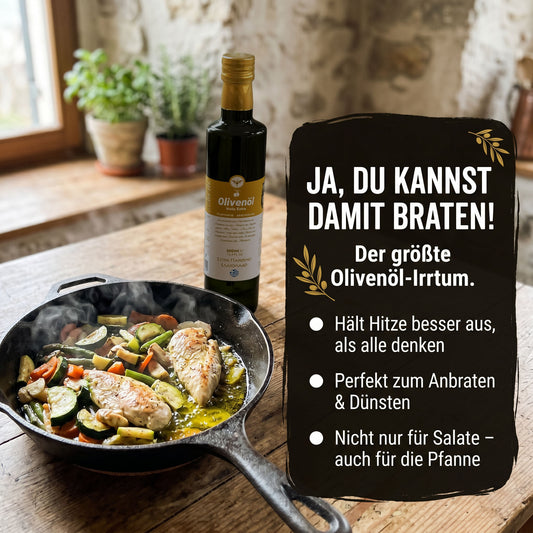
The short answer is yes. One of the most persistent kitchen myths is that extra virgin olive oil is only for cold use and should never be heated. In reality, extra virgin olive oil is remarkably stable when heated, thanks to its high proportion of monounsaturated fats and its natural antioxidants, which help protect it during cooking.
For everyday sauting, roasting, baking and shallow frying at normal home temperatures — generally up to around 180 °C — a good extra virgin olive oil performs beautifully. It is only at very high, prolonged temperatures that any cooking oil begins to break down, and a fresh, polyphenol-rich olive oil is more resistant than most.
Understanding the Smoke Point
The smoke point is the temperature at which an oil starts to smoke and its flavour degrades. For a quality extra virgin olive oil it sits comfortably in the range used for most home cooking. A few practical points help you stay well within it:
- Heat the pan and oil gradually rather than blasting it on maximum.
- If the oil is smoking heavily, it is too hot — take the pan off the heat and let it cool slightly.
- Fresher oil has a higher, more reliable smoke point than old, oxidised oil, which is another reason to use your bottle while it is young.
For gentle, everyday cooking you will rarely approach the limit. Deep frying at very high heat is the one situation where many cooks reach for a more neutral oil, though traditional Mediterranean kitchens have fried in olive oil for generations.
The Best Ways to Use Olive Oil
Raw and finishing
This is where a fine olive oil truly shines. Drizzled over a finished dish — grilled fish, warm pulses, ripe tomatoes, a bowl of soup — its peppery, grassy character comes through undiluted. Use your best extra virgin olive oil here, added off the heat, so none of its aroma is lost.
Dressings and marinades
Olive oil is the backbone of a classic vinaigrette and carries the flavour of garlic, lemon and herbs in a marinade. Its richness balances acidity and helps seasonings cling to vegetables and meat.
Sauting and roasting
For softening onions, roasting vegetables or crisping potatoes, olive oil adds flavour that neutral oils simply cannot. A tray of vegetables tossed in olive oil, sea salt and oregano is one of the easiest and most satisfying dishes you can make.
Baking
Olive oil makes wonderfully moist cakes and breads and is a natural partner for citrus, honey and nuts-free Mediterranean bakes. It keeps baked goods tender for longer than butter does.
How to Choose the Right Olive Oil for Cooking
Not all olive oil is equal. For both cooking and finishing, look for a genuine extra virgin oil — the highest grade, produced by cold mechanical extraction without chemicals or heat. Unfiltered, naturally cloudy oils often retain more of the fruit's character and beneficial compounds.
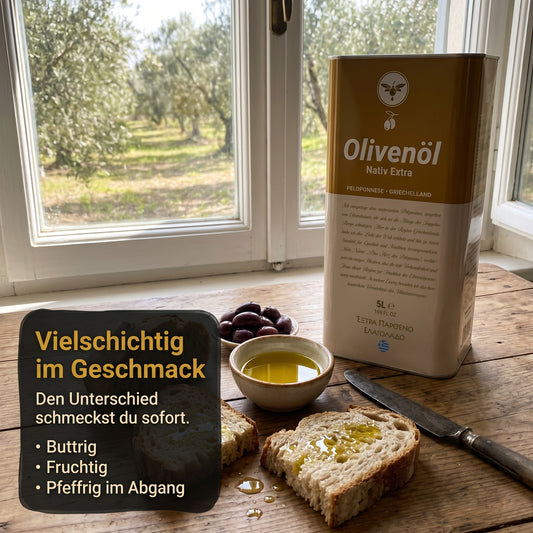
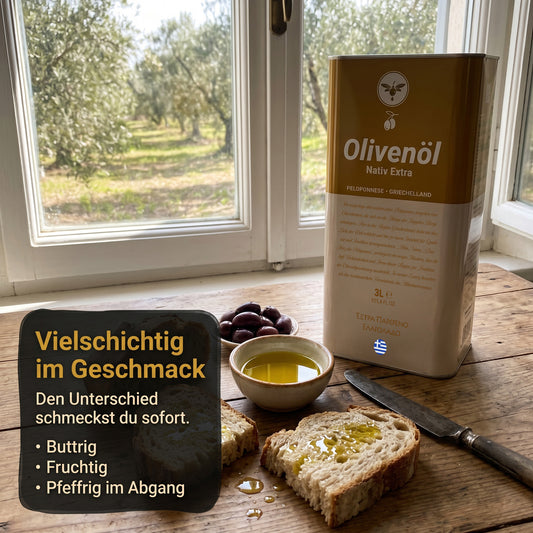
Origin matters too. Our extra virgin olive oil from the Peloponnese is hand-harvested and cold-extracted, giving it a spicy, buttery, peppery flavour that stands up to cooking and lifts a finished plate. A single well-chosen bottle can serve as both your everyday cooking oil and your finishing oil.
How to Store Olive Oil so It Lasts
Olive oil has three enemies: light, heat and air. To protect its flavour and nutrients:
- Keep the bottle tightly closed in a cool, dark cupboard — not next to the hob.
- Choose dark glass or tin, which shield the oil from light.
- Use it within a few months of opening, while it is fresh and lively.
- Never leave the bottle open or store it above a warm oven.
Stored well, a good olive oil rewards you every time you reach for it.
Frequently Asked Questions
Does heating olive oil destroy its health benefits?
Gentle, everyday cooking preserves most of the beneficial monounsaturated fats. Some delicate antioxidants diminish with prolonged high heat, which is why it is worth using your finest oil raw and a good everyday oil for cooking. Both come from the same fruit.
Is extra virgin olive oil good for frying?
Yes, for shallow and pan frying at normal temperatures it works very well and adds flavour. For deep frying at very high heat over long periods, some cooks prefer a more neutral oil, but Mediterranean cooks have long fried in olive oil successfully.
Why does my olive oil taste peppery or make me cough?
That gentle pepperiness at the back of the throat is a sign of freshness and a high polyphenol content — a good thing. It is most noticeable in young, unfiltered extra virgin oils and mellows slightly as the bottle ages.
Our Product Tip
Extra Virgin Olive Oil from the Peloponnese
One honest, hand-harvested oil for everything — cooking, roasting and finishing.
Shop the olive oilCooking with olive oil is not complicated. Choose a real extra virgin oil, treat it with a little respect, and let it do what it has done in Mediterranean kitchens for thousands of years: make simple food taste wonderful. That, to us, is Pour La Vie.