Aleppo Soap for Hair: Can You Really Wash Your Hair With It?
Aleppo soap has been used for centuries for face, body and even shaving — but more and more people are now reaching for this olive-and-laurel bar in the shower to wash their hair, too. If you are curious about switching from bottled shampoo to a traditional, additive-free bar, this guide explains how Aleppo soap works on hair, how to use it properly, and what to expect along the way.
Can you wash your hair with Aleppo soap?
Yes. Aleppo soap is a genuine soap made from just two oils — olive oil and laurel (bay) oil — saponified and then matured for years. Because it contains no synthetic detergents, fragrances or preservatives, many people moving towards a more natural, low-additive routine use it as a solid shampoo alternative. It cleanses hair and scalp gently while leaving the hair's own oils more intact than a harsh foaming shampoo would.
It is worth being realistic: a natural soap behaves differently from a modern shampoo, and there is a short adjustment period. Understanding that from the start makes the switch far smoother.
Why Aleppo soap suits hair washing
The appeal comes down to its short, honest ingredient list. Olive oil is naturally rich and conditioning, helping to soften the hair and comfort a dry, tight scalp. Laurel oil gives the soap its gentle cleansing character and distinctive earthy scent. Together they clean without the sulphates and silicones found in many conventional products — which is exactly why Aleppo soap appeals to anyone with a sensitive scalp or a preference for natural cosmetics.
A higher proportion of laurel oil generally means a more cleansing, slightly more luxurious bar. Our classic bar combines 60% olive oil with 40% laurel oil, a balance that suits most people looking to wash both skin and hair with a single soap.
How to wash your hair with Aleppo soap
- Thoroughly wet your hair with warm water.
- Either rub the bar directly along your scalp and the lengths a few times, or work the bar between wet hands to build a lather and apply that instead.
- Massage gently with your fingertips, focusing on the scalp rather than the ends. The lather will be softer and less foamy than a commercial shampoo — this is normal.
- Rinse very thoroughly with warm water until the hair no longer feels slippery.
- Finish with an acidic rinse (see below). This single step makes the biggest difference to the result.
The all-important acid rinse
Because soap is naturally alkaline and most tap water is hard, hair can feel waxy or straw-like after washing if you stop at water alone. An acidic rinse closes the hair cuticle, restores shine and removes any residue. Mix one to two tablespoons of apple cider vinegar (or the juice of half a lemon) into about 500 ml of water, pour it over your hair after rinsing, leave for a few seconds, then rinse lightly or leave in. The vinegar smell disappears completely as your hair dries.
What to expect: the transition phase
If you are coming from silicone-based shampoos, your hair may feel different — sometimes waxy or heavy — for one to three weeks while your scalp and hair adjust and any silicone build-up clears. This transition is temporary. Using the acid rinse every wash, not over-washing, and rinsing really thoroughly all help. Many people find their hair settles into feeling cleaner for longer, with more natural body. And if Aleppo soap simply does not suit your particular hair, that is fine too — it varies from person to person.
Which Aleppo soap should you choose?
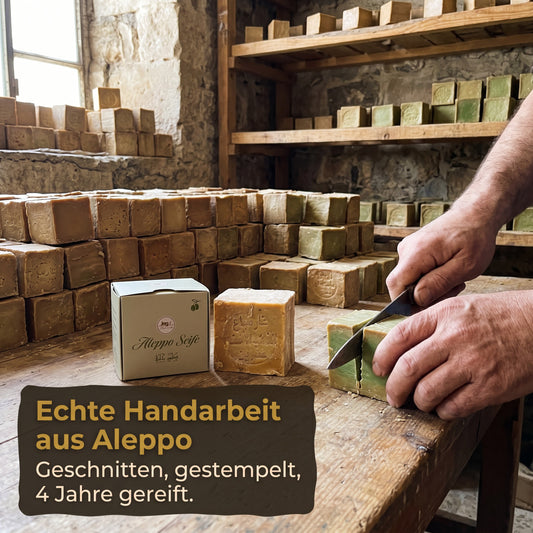
For hair, look for an authentic, additive-free bar with a meaningful laurel oil content. A well-matured soap is milder, because saponification has fully completed over years rather than weeks. Our traditionally hand-cut Aleppo soap is matured for around four years and made with nothing but olive oil and laurel oil — no fragrance, no colourants, no preservatives — which makes it a dependable starting point for washing hair, face and body alike.
Frequently asked questions
How often should I wash my hair with Aleppo soap?
Most people wash every two to three days. Natural soap removes less of the scalp's own oil than a detergent shampoo, so you may find you can stretch the time between washes once your hair has adjusted.
Do I still need conditioner?
Often not — the olive oil content is conditioning in itself, and the acid rinse smooths the cuticle. If your ends feel dry, a tiny amount of olive oil smoothed through them works well.
Can Aleppo soap be used on coloured or curly hair?
Many people with curly hair love it, as it adds definition without stripping. On coloured hair, results vary; do a test wash first, and always use a gentle acidic rinse rather than neat lemon juice.
Our product tip
Aleppo Soap – 60% Olive Oil & 40% Laurel Oil
Traditionally hand-cut and matured for four years — one natural bar for hair, face and body.
Shop Aleppo soapSwitching to a single, natural bar for hair and skin is a small change that fits a simpler, more mindful routine — pure ingredients, centuries of tradition, and nothing you do not need. That is care the way we believe in it — Pour La Vie.