Polyphenolreiches Olivenöl erkennen
That sharp tickle in the throat and the slight bitterness on the tongue are not flaws. They are often the first clue when you want to polyphenolreiches Olivenöl erkennen. Many people were taught that a mild olive oil is automatically better, softer, or more refined. In reality, the most characterful extra virgin olive oils often have exactly the sensory profile that signals freshness, careful production, and a naturally high level of protective plant compounds.
If you shop with health, purity, and origin in mind, this matters. Polyphenols are part of what makes premium olive oil more than a pantry basic. They help protect the oil from oxidation, shape flavor, and are one of the reasons high-quality extra virgin olive oil is valued in a conscious Mediterranean lifestyle. The catch is simple: you cannot judge it by price alone, and attractive packaging does not guarantee substance.
How to polyphenolreiches Olivenöl erkennen
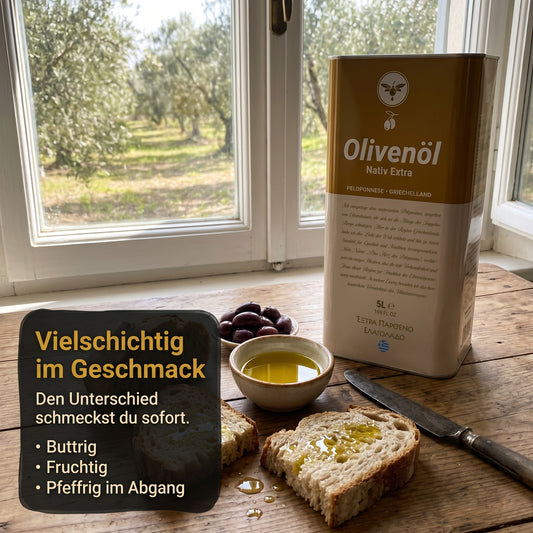
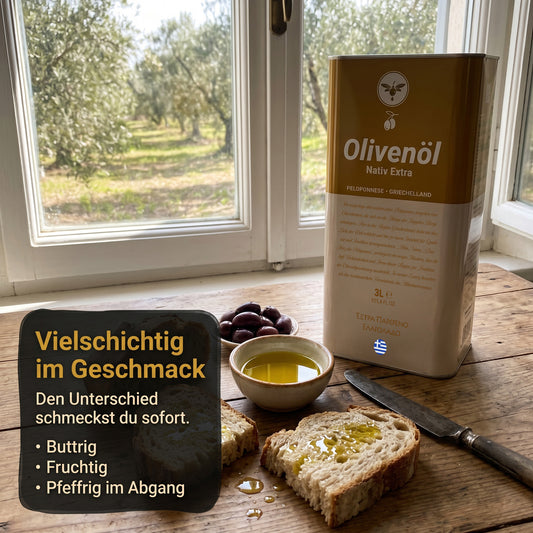
The most reliable place to start is with taste. Polyphenol-rich olive oil usually tastes lively, not flat. You may notice green notes like fresh-cut grass, artichoke, green almond, tomato leaf, or herbs. Bitterness on the palate is a good sign, especially in oils from early harvest olives. A peppery sensation in the throat is another classic marker. Sometimes it appears as a gentle warmth, sometimes as a distinct cough. That reaction is linked to phenolic compounds and is often exactly what experienced buyers look for.
Still, taste alone is not the whole story. Some varieties are naturally more intense than others, and growing conditions change from year to year. A balanced oil can be polyphenol-rich without being aggressively harsh. If an oil is painfully bitter or tastes coarse, that does not automatically make it superior. Quality is not about force. It is about freshness, harmony, and clarity.
Color is where many shoppers get misled. Deep green looks appealing, but it is not proof of higher polyphenols. Olive oil can range from green to golden depending on olive variety, ripeness, and filtration. Serious producers do not ask you to judge quality by color because it simply is not dependable.
What the label can tell you
If you want to recognize a genuinely high-quality oil before opening the bottle, the label matters more than many people realize. “Extra virgin” is the baseline, not the finish line. It tells you the oil met specific standards, but it does not guarantee an especially high phenolic content.
Harvest timing is one of the strongest clues. Early harvest or early picked olives tend to produce oil with a greener, more bitter, more peppery profile and often a higher polyphenol content. The trade-off is yield. Producers get less oil from unripe olives, which is one reason authentic early harvest oils are rarely bargain products.
A harvest date is more useful than a vague best-by date. Freshness matters because polyphenols decline over time. If a producer shares the harvest season clearly, that is a sign of transparency. Origin also matters. A bottle that names a specific region, estate, or mill gives you more confidence than a generic blend with unclear sourcing.
Some brands also provide lab values, including polyphenol content measured in mg/kg. This is one of the strongest indicators, but only if the testing is credible and current. If you see a clear phenolic figure tied to a harvest lot, that is a meaningful quality signal. If there is no lab data, that does not mean the oil is poor, but it does mean you need to rely more on sensory and sourcing clues.
Freshness, packaging, and storage make a real difference
Even an excellent oil can lose its edge if it is badly packaged or poorly stored. Light, heat, and oxygen are the enemies. Dark glass or high-quality tins help protect the oil. Clear glass may look elegant on a shelf, but it exposes the contents to light and speeds decline.
Bottle size matters too. If you use olive oil slowly, a smaller bottle is often the better choice because the oil spends less time in contact with air after opening. Once opened, a polyphenol-rich oil should still taste vivid. If it quickly becomes dull, waxy, or stale, storage may be the issue.
This is also why old stock can be disappointing even when the label sounds premium. A fresh harvest from a careful producer will usually outperform a more expensive bottle that has already spent too long in warehouses or under store lighting.
The sensory signs that matter most
When people ask how to identify premium olive oil, they often expect a checklist. In practice, recognition comes from combining several honest signals. A fresh, polyphenol-rich extra virgin olive oil often shows a clean aroma, green character, measured bitterness, and peppery finish. It feels alive rather than neutral.
It should never smell rancid, musty, or like old nuts. Those are warning signs. A flat, oily, almost greasy taste can also suggest age or lower quality. Good olive oil has energy. It leaves an impression that is bright and botanical, not heavy and tired.
A simple tasting method helps. Pour a little into a small glass, warm it gently with your hand, and smell before tasting. Then take a sip, let it coat the mouth, and notice what happens at the back of the throat. If bitterness and pepper show up in a clean, balanced way, you are likely on the right track.
Why mild does not always mean better
Many American shoppers grew up with olive oils that were intentionally soft and neutral. That style can be pleasant for certain uses, but it is not the same as high-phenolic quality. Mild oils often come from riper olives, later harvests, or blends designed for broad appeal. They may still be extra virgin and perfectly usable, but they usually offer a different nutritional and sensory profile.
This is where personal preference matters. If you are new to premium olive oil, an intensely bitter oil may feel surprising at first. That does not mean you need the strongest bottle available. It means it helps to choose an oil with balance and learn what freshness really tastes like. Once your palate adjusts, bland oils often start to feel empty.
Questions worth asking before you buy
A trustworthy producer should be able to answer basic quality questions clearly. Where were the olives grown? When were they harvested? Was the oil cold extracted? Is the harvest date shown? Is there any testing for polyphenols or freshness markers? Vague language is common in the olive oil world, but real quality usually comes with real detail.
Terms like premium, artisanal, or gourmet sound attractive, yet they are not regulated proof points. Specificity is better than marketing language. Region, cultivar, harvest window, extraction method, and storage standards all tell you more than decorative adjectives.
For shoppers who care about clean ingredients and purposeful buying, this is where a curated brand approach makes a difference. A bottle selected for freshness, origin, and functional quality is simply easier to trust than a mass-market oil chosen to hit a price point.
Can you recognize high polyphenols without a lab test?
Yes, to a point. You can make a strong practical judgment from flavor, harvest style, origin transparency, and packaging. You cannot know the exact number without analysis, but you can absolutely learn to spot the oils that are more likely to be rich in polyphenols.
Think of it as pattern recognition. Early harvest. Extra virgin. Specific origin. Dark protective packaging. Fresh harvest date. Green, bitter, peppery taste. These clues tend to travel together. When several are present at once, your chances improve dramatically.
That said, not every excellent oil will advertise lab data, and not every high-number oil will suit every palate. The best choice depends on how you use it. For finishing vegetables, salads, soups, or warm bread, a vivid, polyphenol-rich oil shines. For high-heat cooking, some of that delicate character matters less. Context changes what counts as ideal.
If you want olive oil that supports a more conscious kitchen, trust your senses, but ask for evidence too. The best bottles do not hide behind soft claims. They show their origin, their freshness, and their character from the first pour. And once you know what to look for, polyphenol-rich olive oil becomes surprisingly easy to recognize - not by hype, but by honesty in the bottle.