Naturseife für empfindliche Haut wählen
Sensitive skin rarely stays quiet when a cleanser is wrong. It tightens after washing, turns red around the cheeks or hands, or reacts to fragrance long before you finish the bar. That is exactly why naturseife für empfindliche haut has become such a practical choice for people who want fewer additives, clearer formulas, and a gentler daily routine.
But not every natural soap is automatically skin-friendly. "Natural" sounds reassuring, yet sensitive skin often reacts to essential oils, strong exfoliants, or formulas that cleanse too aggressively. A good bar should do less, not more. It should cleanse without stripping, support the skin barrier, and leave the skin feeling calm rather than squeaky.
What makes naturseife für empfindliche haut different?
The main difference is not marketing language. It is formulation. Sensitive skin tends to do best with short ingredient lists, minimal fragrance, and oils that clean while helping the skin stay comfortable. Natural soap made with olive oil is often a strong fit because it is traditionally valued for its mild, skin-friendly character.
That said, there is a trade-off. True soap has an alkaline pH, which can feel too active for some people with an already compromised skin barrier. For others, especially those who react badly to synthetic surfactants or heavily fragranced body washes, a simple natural soap bar can be the better option. It depends on your skin, your trigger ingredients, and how often you wash.
A well-made bar for sensitive skin usually avoids unnecessary fillers and focuses on a few functional ingredients. Instead of chasing foam, color, or perfume, it aims for balance. That is often where traditional soaps stand out - not because they promise everything, but because they keep the formula honest.
The ingredients worth looking for
If you are shopping for natural soap for sensitive skin, ingredient quality matters more than a long list of trendy claims. Olive oil is one of the most trusted bases because it cleanses gently and gives the bar a creamy, conditioning feel. It is especially useful for dry, reactive, or easily irritated skin that needs a cleanser with restraint.
Laurel oil can also be beneficial, particularly in traditional Aleppo-style soap. It has a long history in skin care and is often chosen by people who want a purifying bar without relying on synthetic additives. Still, the percentage matters. A higher laurel content can feel more active on the skin, which some people love and others may find too intense.
Glycerin is another positive sign, especially when it remains naturally present in the soap after production. It helps attract moisture and can reduce that dry, tight feeling after washing. Oatmeal, clay, or botanical powders may sound appealing, but for highly sensitive skin they are not always helpful. Texture can irritate, and extra plant ingredients can complicate a formula that should stay simple.
Fragrance deserves special attention. Even natural fragrance can be a problem. Essential oils from lavender, citrus, peppermint, eucalyptus, or tea tree may smell clean and botanical, but sensitive skin often disagrees. If your skin is reactive, unscented or very lightly scented is usually the safer route.
What to avoid when skin reacts easily
The biggest mistake is assuming that natural means non-irritating. Sensitive skin responds to irritation, not branding. A bar can be handmade, plant-based, and beautifully packaged, and still be too harsh for your face or body.
Watch for strong perfumes, aggressive scrubs, bright colorants, and formulas packed with many essential oils. Too many active botanicals can increase the chance of a reaction. If your skin barrier is already stressed, less is often the better luxury.
It is also wise to be cautious with bars designed for deep cleansing, acne control, or deodorizing. These may work well for oily or resilient skin, but they can leave sensitive skin uncomfortable after repeated use. A clean feeling should not come with stinging, heat, or flaky patches the next morning.
Is Aleppo soap a good option?
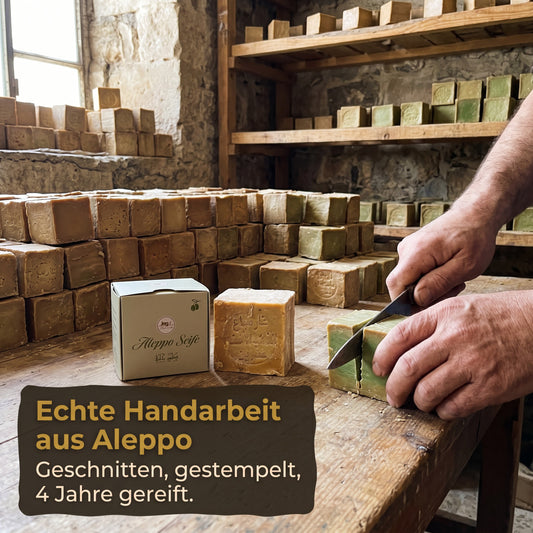
For many people, yes. Traditional Aleppo soap is one of the most respected examples of simple, functional natural cleansing. Made from olive oil and laurel oil, it reflects exactly what many sensitive-skin shoppers are looking for - a heritage formula, minimal ingredients, and no unnecessary extras.
Its strength is its clarity. There is no need for a complicated performance story when the formula has already stood the test of time. Olive oil gives softness. Laurel oil adds a more clarifying character. When these are balanced well, the result can be a bar that feels pure, practical, and surprisingly versatile.
Still, not every version suits every person. If your skin is very dry or easily irritated, a lower laurel concentration may feel better. If your skin is combination, blemish-prone, or prone to congestion on the back or chest, a slightly more active bar may be worth trying. The best choice is not the strongest one. It is the one your skin tolerates consistently.
For a brand like Jegit, this kind of soap fits naturally into a cleaner lifestyle - one where origin, craftsmanship, and ingredient integrity matter as much as the result on the skin.
How to choose the right bar for your skin
Start with the part of the body you want to wash. A soap that works beautifully on the hands or body may still feel too drying for the face. Facial skin is usually less forgiving, especially if you already use retinoids, exfoliating acids, or prescription treatments.
Then consider your main concern. If your skin is mostly dry and reactive, choose a bar rich in olive oil with little to no added fragrance. If your skin is sensitive but also feels congested or unbalanced, a traditional olive and laurel soap may offer a better middle ground. If your skin flares unpredictably and reacts to almost everything, the simplest formula should come first.
It is also smart to pay attention to curing and craftsmanship. A properly cured soap bar tends to last longer, feel more refined, and cleanse more evenly. Cheap bars with natural branding often disappoint because the formula is not the issue alone - the production quality is, too.
How to use naturseife für empfindliche haut without overdoing it
Even a good soap can become too much when it is used too often or left on the skin too long. Sensitive skin does better with a gentle technique. Lather the soap in your hands first rather than rubbing the bar directly over the face. Use lukewarm water, rinse thoroughly, and pat the skin dry instead of rubbing.
Follow quickly with a simple moisturizer while the skin is still slightly damp. This step matters. Cleansing is only half the routine. The skin barrier needs support after washing, especially in dry weather, after sun exposure, or during winter when indoor heating makes skin more reactive.
If you are trying a new bar, patch test first. Use it on a small area for several days before making it part of your full routine. That may feel cautious, but sensitive skin usually rewards patience.
Signs you found the right soap
The right bar is often unexciting in the best possible way. Your skin feels clean but not tight. Redness does not spike after washing. You are not reaching for extra cream immediately just to feel normal again. Over time, the skin looks more settled, not perfectly flawless, but noticeably less stressed.
A good natural soap should fit into your life quietly. It should respect your skin, simplify your shelf, and make daily care feel less like damage control. For people with sensitive skin, that kind of consistency is often more valuable than bold claims or fast trends.
Choosing well means thinking beyond the word natural. Look for fewer additives, meaningful oils, and traditional formulas with a real purpose. When a soap is made with care and chosen with your skin in mind, simple cleansing can feel like one of the healthiest parts of the day.
If your skin has been asking for less fragrance, fewer chemicals, and more trust in what touches it every day, a carefully chosen natural soap bar is a very good place to start.