Best Olive Oil for Dipping: What to Buy
A great dipping oil should make good bread feel like enough. That is why choosing the best olive oil for dipping is less about fancy labels and more about what you taste the second it hits the plate - freshness, peppery finish, green aroma, and real character.
Too many bottles are smooth in a forgettable way. They taste flat, oily, or overly mellow, which might work for cooking but rarely creates that moment you want when warm bread meets a truly vibrant extra virgin olive oil. For dipping, you want an oil that tastes alive.
What makes the best olive oil for dipping?
The short answer is extra virgin olive oil with freshness, balance, and enough personality to stand on its own. Dipping is one of the purest ways to taste olive oil, so every detail matters. If the oil is dull, you will notice immediately. If it is clean, fragrant, and naturally peppery, it can turn a simple appetizer into the best part of the meal.
A good dipping oil usually has some fruitiness upfront, followed by bitterness and a peppery finish. Those last two qualities are not flaws. They are often signs of polyphenols, the natural compounds associated with both flavor intensity and the health-conscious appeal many shoppers are looking for. An oil that gives a gentle tickle in the throat often signals freshness and quality, not harshness.
That said, the best bottle depends on what you enjoy. Some people want a bold, grassy oil that dominates the bread. Others prefer a softer, rounder profile with almond, butter, or ripe olive notes. Neither is wrong. The key is matching the oil to the experience you want.
Best olive oil for dipping means extra virgin - but not all extra virgin is equal
The words extra virgin matter, but they are only the starting point. Plenty of oils meet the category on paper and still taste tired by the time they reach your kitchen. For dipping, you need more than technical compliance. You need quality you can smell and taste.
Look for cold-extracted extra virgin olive oil from a clearly named region or producer. Transparency is a strong sign. When a brand tells you where the olives were grown and how the oil was made, it usually means the product is being treated as food with origin, not as a generic commodity.
Harvest timing also plays a role. Early-harvest oils tend to be greener, sharper, and more polyphenol-rich. They are often ideal for dipping because they bring intensity and freshness. Later-harvest oils can be softer and more approachable, which some people prefer with delicate breads or as part of a broader appetizer board.
The best choice is not always the mildest or the most expensive. It is the one that still tastes vivid and clean when served on its own.
Flavor notes to look for in a dipping olive oil
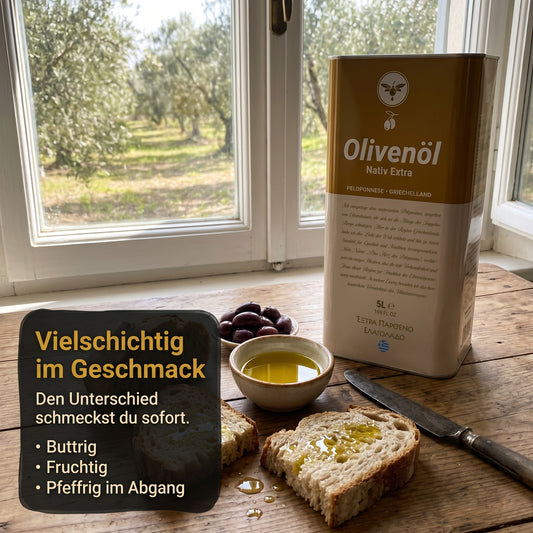
If you have ever dipped bread into olive oil at a restaurant and thought, this tastes incredible, you were probably tasting a combination of freshness and structure. Great dipping oils often carry notes like fresh-cut grass, green tomato leaf, artichoke, herbs, almond, or green olive. The finish may be peppery, sometimes even pleasantly throat-catching.
Those flavors are a good thing. They signal that the oil has not been stripped of its identity. In fact, the oils that feel the most memorable at the table are rarely neutral. They are balanced, but they are not bland.
Mild oils can still work for dipping, especially if you are serving them with flaky salt, herbs, or a softer bread. But if your goal is a premium Mediterranean experience at home, a more expressive oil will usually give you more satisfaction.
Freshness matters more than most people realize
Olive oil is not like wine. It does not improve with age. For dipping, freshness is one of the biggest quality markers because the oil is the main event. Once it loses its brightness, it loses the very thing that makes dipping special.
Check for a harvest date if available. A bottle that tells you when the olives were picked gives you far more useful information than a vague expiration date alone. Ideally, you want oil from a recent harvest, stored properly in a dark bottle or tin that protects it from light.
Heat, oxygen, and sunlight are the enemies here. Even a very good oil can go flat if it has been exposed to poor storage conditions. That is one reason premium, carefully handled oils often justify their price. They are selected and protected with flavor in mind.
Should dipping olive oil be high in polyphenols?
If you care about both taste and natural benefits, the answer is often yes. Polyphenol-rich olive oil tends to have more bitterness and pepper, which many people associate with a fresher, more authentic extra virgin profile. It also aligns well with a health-conscious lifestyle built around minimally processed, naturally functional foods.
Still, there is a trade-off. Very high-polyphenol oils can feel intense if you are used to supermarket bottles with a softer profile. Some people love that boldness from the first pour. Others need a little time to appreciate it. If you are serving guests, a balanced high-quality oil is often the safest choice - vibrant enough to feel premium, but not so assertive that it overwhelms the plate.
For brands focused on natural quality, this is where olive oil becomes more than a pantry staple. It becomes a clean, everyday pleasure with real character.
How to taste olive oil before you serve it
You do not need a formal tasting setup. Pour a small amount into a glass or shallow bowl and smell it first. A good dipping oil should smell fresh and inviting, not waxy, stale, or greasy.
Then taste a little on its own before adding bread. Notice whether it starts fruity, turns gently bitter, and finishes peppery. That progression is often what makes olive oil feel premium. If it tastes muddy or one-dimensional, it will not get better once the bread is involved.
This simple step helps you avoid over-seasoning too. A truly good olive oil does not need much. Sometimes a pinch of sea salt is enough. Sometimes nothing at all.
What to avoid when buying olive oil for dipping
The biggest mistake is choosing by packaging alone. Beautiful labels can hide average oil, and words like smooth or light often signal a milder style that may disappear on the plate.
You should also be cautious with blends that say little about origin. A blend is not automatically bad, but for dipping, traceability matters. If the producer is vague about sourcing, freshness and consistency become harder to trust.
Another common issue is buying oil that is meant mainly for cooking and expecting it to perform as a finishing oil. Cooking oils can be perfectly fine for sautéing or roasting, but dipping asks more of the bottle. It has to carry the whole experience.
The best bread and pairings for dipping olive oil
A crusty sourdough, warm baguette, or rustic country loaf works beautifully because the bread gives structure without overpowering the oil. You want chew and texture, not heavy sweetness.
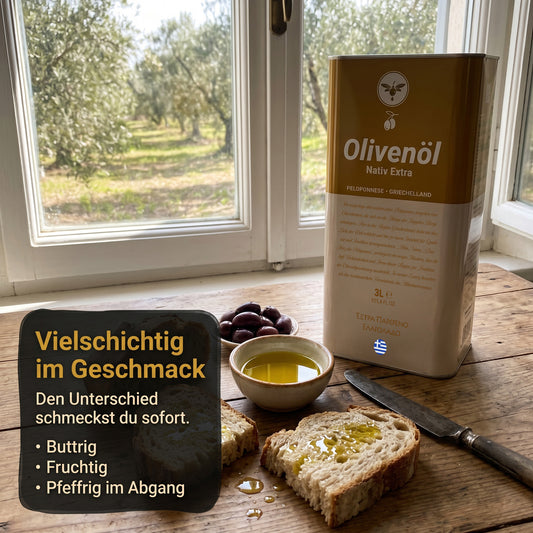
If the oil is bold and grassy, keep the plate simple. Bread, sea salt, maybe a few olives. If the oil is softer and more buttery, you can add cracked pepper, fresh herbs, or a light sprinkle of dried oregano. Balsamic is popular, but it can dominate a premium olive oil, so it is not always the best match if your goal is to taste the oil itself.
This is one of those cases where less usually gives you more.
How to choose a bottle you will actually love
Start with your preference for intensity. If you enjoy arugula, radicchio, or dark chocolate, you may appreciate a greener, more peppery olive oil. If you prefer softer flavors, choose an extra virgin oil described as balanced or rounded rather than aggressively bold.
Then look at origin, extraction method, and freshness. Cold-extracted extra virgin olive oil from a respected Mediterranean growing area is a strong place to begin. Oils from the Peloponnese, for example, are often prized for their depth, clean finish, and naturally vibrant profile. A carefully sourced bottle from a quality-driven brand like Jegit fits well if you want that premium, origin-forward experience without the guesswork.
Finally, trust your palate. The best olive oil for dipping is not the one with the loudest marketing. It is the one that makes you slow down, tear off another piece of bread, and notice how something so simple can taste this pure.
A bottle worth dipping is a bottle worth respecting - store it well, serve it fresh, and let it speak for itself.