Aleppo Seife 40 % Lorbeeröl: Erfahrungsbericht
If you are considering a traditional bar cleanser and want something simpler than a shelf full of synthetic skincare, this Aleppo soap 40 laurel oil review is the place to start. A bar with 40% laurel oil sits at the richer, more intensive end of the Aleppo soap range, and that matters. It affects how the soap smells, how it feels on skin, and who is most likely to love it.
Aleppo soap has a long-standing reputation for clean, minimal care. At its core, it is known for a short ingredient list built around olive oil and laurel oil. That simplicity is a big reason people switch to it. But not all Aleppo soaps feel the same, and the 40% version is not the mild, barely-there bar some first-time buyers expect.
What makes Aleppo soap with 40% laurel oil different?
The percentage refers to the share of laurel oil in the formula. In practical terms, a 40% bar is more aromatic, more assertive, and often more targeted than lower-percentage versions. Olive oil usually brings a gentler, more conditioning quality. Laurel oil contributes the signature herbal scent and the purifying feel many people seek out.
That means a 40% bar often appeals to shoppers looking for a deeper-cleansing experience. People with oilier skin, blemish-prone skin, or a scalp that gets greasy quickly may prefer it over a 5%, 12%, or 20% bar. At the same time, higher laurel content can feel too active for skin that is already fragile, stripped, or reactive.
This is where expectations matter. More laurel oil does not automatically mean better for everyone. It usually means stronger character and a more specific use case.
Aleppo soap 40 laurel oil review: texture, scent, and feel
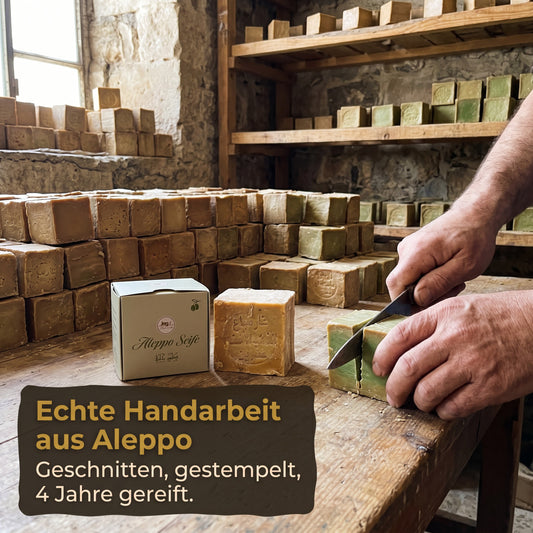
A good 40% Aleppo bar usually feels dense, solid, and long-lasting in the hand. The outside can be beige to brown from the curing process, while the inside often shows a greener tone. That contrast is normal for traditionally made Aleppo soap and is often one of the easiest visual signs that you are holding an authentic-style bar rather than a mass-market imitation.
The scent is distinct. This is not a perfumed soap and it does not try to smell like vanilla, cotton, or flowers. It has an earthy, herbal, slightly medicinal profile. Some people love that clean, botanical sharpness right away. Others need a few days to adjust. If you are sensitive to fragrance but still prefer a neutral-smelling routine, it is worth knowing that natural laurel oil has presence.
On the skin, the lather tends to be light rather than fluffy. Traditional Aleppo soap does not behave like a detergent-heavy shower bar. It cleans in a quieter way. A 40% laurel version often leaves skin feeling very fresh, sometimes even squeaky on oilier areas. That can be satisfying on the face, back, or scalp if excess oil is your main issue. For dry cheeks or winter-stressed hands, it can feel too purifying if used too often.
Who should try it and who may prefer less laurel oil?
This is the most important part of any honest Aleppo soap 40 laurel oil review. The best bar is not the strongest bar. The best bar is the one your skin actually enjoys using consistently.
If your skin leans oily, congested, or acne-prone, a 40% bar can be a very good fit. Many users like it for the face, chest, shoulders, and back because it feels clean without the heavy residue some creamy cleansers leave behind. It can also suit people who want a minimalist body care routine with fewer unnecessary additives.
If you have combination skin, it depends on how you use it. Some people do well using a 40% bar only once a day or only on oilier zones. Others prefer a lower laurel percentage for daily face washing and save the 40% bar for occasional deeper cleansing.
If your skin is very dry, highly sensitive, or prone to tightness, caution makes sense. Traditional soap is still soap, and high-laurel formulas can be too much when the skin barrier is already under stress. In those cases, a lower laurel percentage often gives a better balance of cleansing and comfort.
For scalp use, the same logic applies. A 40% bar may work beautifully on an oily scalp or for those who want to reduce styling buildup. But if your hair is color-treated, very dry, or your scalp tends to itch from dryness, this may not be your ideal everyday option.
Performance on common skin concerns
People often buy high-laurel Aleppo soap hoping it will solve everything at once. Realistically, it can be a very good supportive product, but results depend on your skin type and the rest of your routine.
For blemishes, the biggest advantage is usually the clean, stripped-back formula. Fewer extras can mean fewer variables. A 40% bar may help skin feel less greasy and more balanced over time, especially if harsh foaming cleansers have been part of the problem. But if you overuse it, skin may respond with irritation or rebound oiliness.
For sensitive skin, the picture is mixed. Some people react better to short, traditional ingredient lists than to modern cleansers full of fragrance and surfactants. Others find the higher laurel concentration too stimulating. Sensitive skin is not one category, so patch testing matters.
For dry patches or eczema-prone skin, a 40% bar is usually not the first recommendation. Some users tolerate it on the body but not on the face. Others use it only occasionally. If comfort is your top priority, lower-laurel Aleppo soap is often the smarter place to begin.
How to use it without overdoing it
The easiest mistake with this type of soap is assuming natural automatically means you can use more of it. Usually, less works better.
For the face, start once daily, ideally in the evening. Lather it in your hands first rather than rubbing the bar directly on your skin. Massage briefly, then rinse well. If your skin feels clean but not tight after a week, you are in the right range. If it feels dry, scale back or switch to a lower percentage.
For the body, it tends to shine on areas that need a fresher, more purifying cleanse, especially in warmer weather or after exercise. For the scalp, follow with a suitable conditioning step if your hair needs it. Traditional soap bars can leave hair feeling different at first, and that adjustment period is real.
Storage also matters more than people think. Let the bar dry fully between uses. A well-cured, properly stored Aleppo soap lasts a long time, which adds to its value.
What to look for in a quality bar
Not every bar labeled Aleppo soap delivers the same experience. Traditional production, a clear ingredient list, and proper curing all make a difference. A quality bar should feel hard, not soft or overly moist. It should not be loaded with synthetic fragrance, artificial color, or a long list of filler ingredients.
This is where a curated seller matters. Brands that focus on origin, clean ingredients, and authenticity tend to offer a more reliable product than generic marketplace listings. At Jegit, that quality-first approach is part of the appeal. The point is not just to buy soap. It is to choose a bar that reflects the original purpose of Aleppo soap - simple, effective care without unnecessary compromise.
Is Aleppo soap 40 laurel oil worth it?
For the right person, yes. If you want a more intensive Aleppo bar, appreciate natural herbal scent, and your skin benefits from a purifying cleanse, 40% laurel oil can feel like a real upgrade. It is especially compelling for oily or blemish-prone skin and for shoppers trying to move toward cleaner, more traditional body care.
But it is not the universal starting point. If you are new to Aleppo soap, highly sensitive, or mainly trying to soothe dry skin, a lower laurel percentage may be the better long-term choice. There is no prize for choosing the strongest bar if your skin prefers something gentler.
The best way to think about it is this: Aleppo soap with 40% laurel oil is not a trend product. It is a purposeful one. When your skin type, expectations, and usage line up, it delivers the kind of clean, honest performance that keeps people coming back to traditional soap in the first place. Choose it for fit, not hype, and it is much more likely to earn a permanent place by your sink or in your shower.