How to store olive oil properly?
Du kannst ein wunderbar hergestelltes Olivenöl kaufen – kalt extrahiert, reich an Polyphenolen, voll frischer grüner Noten – und es trotzdem innerhalb einer Woche ruinieren, indem du es neben dem Herd aufbewahrst. Das ist meist die eigentliche Antwort auf die Frage, wie man Olivenöl richtig lagert: nicht irgendwo in der Küche, sondern unter Bedingungen, die sein Aroma, seine Reinheit und seinen Nährwert schützen.
Olivenöl ist ein Naturprodukt. Es ist nicht auf dieselbe sorglose Weise haltbar wie raffinierte Vorratsprodukte – und das ist Teil dessen, was es wertvoll macht. Ein hochwertiges natives Olivenöl extra enthält empfindliche Aromastoffe und wertvolle Antioxidantien, die auf ihre Umgebung reagieren. Licht, Sauerstoff und Wärme beschleunigen allesamt die Oxidation. Sobald dieser Prozess beginnt, verliert das Öl zunehmend seine Frische, schmeckt flacher und kann schließlich schal oder ranzig werden.
Wenn dir saubere Zutaten und echte Lebensmittelqualität wichtig sind, ist die Lagerung kein Nebensatz. Es ist Teil des Schutzes dessen, wofür du bezahlt hast.
Olivenöl richtig lagern für den täglichen Gebrauch
Der beste Platz zur Aufbewahrung von Olivenöl ist kühl, dunkel und stabil. Ein geschlossener Küchenschrank, weg vom Backofen, der Spülmaschine, dem Toaster und direktem Sonnenlicht ist in der Regel ideal. Denk an Vorratsraum-Bedingungen, nicht an Theken-Display.
Die Temperatur spielt eine größere Rolle als viele Menschen denken. Olivenöl hält sich am besten bei etwa 14–20 °C. Das bedeutet nicht, dass du einen speziellen Weinbekühlschrank oder ein Thermometer neben der Flasche brauchst. Es bedeutet einfach, Extreme zu vermeiden. Ein Regal neben dem Herd mag bequem erscheinen, aber wiederholte Hitzeeinwirkung verkürzt die Haltbarkeit des Öls. Genauso gilt das für ein sonniges Fensterbrett, das die Flasche tagsüber erwärmt und gleichzeitig UV-Licht ausgesetzt ist.
Eine einfache Faustregel: Wenn der Platz warm, hell oder dampfig wird, ist er kein gutes Zuhause für Olivenöl.
Die drei Dinge, die Olivenöl am schnellsten schädigen
Die Hauptfeinde sind Licht, Wärme und Luft. Sie wirken unterschiedlich, tauchen aber im Durchschnittshaushalt oft gemeinsam auf.
Licht baut empfindliche Verbindungen im Öl ab. Klare Glasflaschen sehen vielleicht schön aus, bieten aber weniger Schutz als dunkles Glas oder Metalldosen. Wärme beschleunigt chemische Reaktionen, einschließlich der Oxidation. Auch mäßige, aber wiederholte Wärme kann das Öl schneller altern lassen als erwartet. Luft wird zum Problem, sobald die Flasche geöffnet ist. Jedes Mal, wenn Sauerstoff eintritt, beginnt er mit dem Öl zu interagieren und reduziert langsam die Frische.
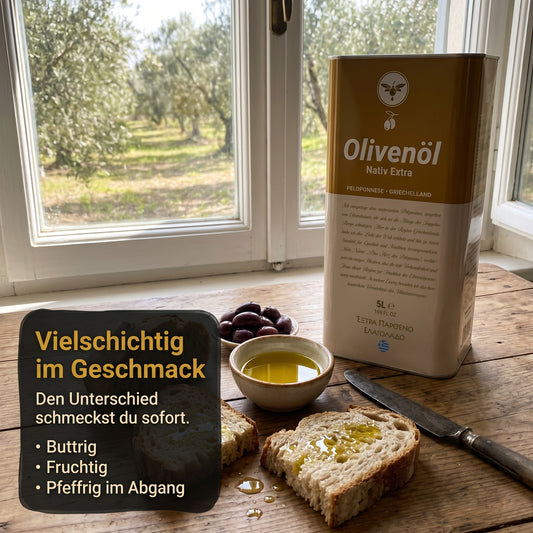
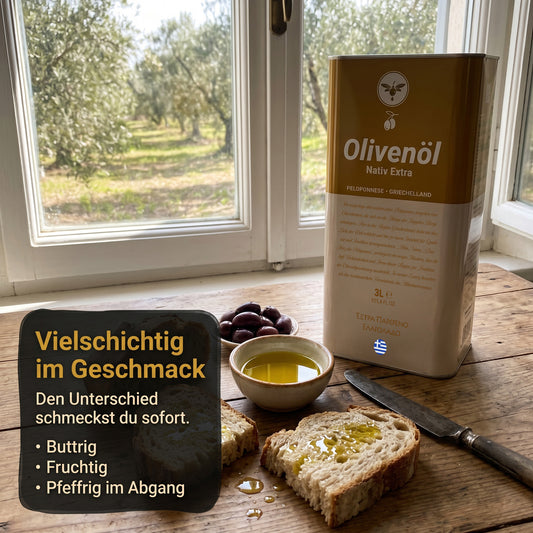
Deshalb ist die Verpackung wichtig. Dunkles Glas und Edelstahlbehälter sind aus gutem Grund praktisch. Sie sind nicht nur prämium-optisch, sondern helfen, den Charakter des Öls zu bewahren.
Ist der Kühlschrank eine gute Idee?
In der Regel nein – zumindest nicht für den täglichen Gebrauch. Kühlung kann Olivenöl trüb machen und es teilweise erstarren lassen, was eine natürliche Reaktion auf Kalttemperaturen ist. Das bedeutet nicht unbedingt, dass das Öl beschädigt ist, kann aber die Textur und die Handhabbarkeit beeinträchtigen. Du musst warten, bis es wieder Zimmertemperatur erreicht.
Für die meisten Haushalte erzeugt Kühlung mehr Unannehmlichkeiten als Nutzen. Ein kühler Vorratsschrank reicht aus. Die Ausnahme: sehr heiße Klimata oder Küchen, die dauerhaft warm sind. Wenn die Raumtemperatur regelmäßig weit über den idealen Bereich steigt, kann kurzzeitige Kühlung besser sein als konstante Hitze. Das Öl kann dann trüb und zäher werden, bis es sich wieder erwärmt.
Wie lange bleibt Olivenöl frisch?
Ungeöffnetes Olivenöl hält sich bei richtiger Lagerung viele Monate, aber Frische ist nicht nur eine Frage des aufgedruckten Mindesthaltbarkeitsdatums. Olivenöl lässt sich am besten behandeln wie Saft statt wie ein ewig haltbares Vorratsgut. Je näher du es an Ernte und Abfüllung verwendest, desto lebendiger schmeckt es in der Regel.
Nach dem Öffnen versuche, es innerhalb von zwei bis drei Monaten für den besten Geschmack zu verbrauchen – besonders wenn es ein erstklassiges natives Öl extra ist, das du roh in Dressings, Dips oder über Gemüse genießen möchtest.
Deshalb ist auch die richtige Flaschengröße wichtig. Ein großer Behälter kann wirtschaftlich sein, aber nur wenn du ihn gleichmäßig verbrauchst. Wenn Olivenöl etwas ist, das du gelegentlich verwendest, bewahrt eine kleinere Flasche die Qualität oft besser als eine große, die monatelang immer wieder geöffnet wird.
Olivenöl nach dem Öffnen richtig lagern
Nach dem Öffnen werden die Prioritäten noch einfacher: gut verschließen, regelmäßig verwenden und von Wärme und Licht fernhalten. Den Deckel nicht locker lassen. Das Öl nicht in eine dekorative klare Flasche umfüllen, die es nicht schützt. Und es nicht direkt über dem Herd lagern, weil es beim Kochen praktisch ist.
Wenn du Olivenöl in einer größeren Dose kaufst, kann es sinnvoll sein, eine kleine Menge in eine dunkle, gut verschlossene Flasche für den täglichen Gebrauch umzufüllen, während der Hauptbehälter geschlossen in einem kühlen Schrank verbleibt. So wird das Groß der Ware seltener Luft ausgesetzt.
Zeichen, dass dein Olivenöl schlecht gelagert wurde
Du brauchst kein Labor, um zu bemerken, wenn Olivenöl seinen Höhepunkt überschritten hat. Frisches natives Olivenöl extra riecht oft lebendig – manchmal grün, krautig, fruchtig oder leicht pfeffrig. Schlecht gelagertes oder oxidiertes Öl neigt dazu, flach, wachsartig, schal oder irgendwie nach alten Nüssen oder Wachsmalstiften zu riechen.
Auch der Geschmack verrät es. Bitterkeit und Pfeffrigkeit können positive Zeichen in einem frischen, polyphenolreichen Öl sein. Ranzigkeit ist etwas anderes – sie schmeckt stumpf, fettig oder ungewohnt schwer, ohne den sauberen Abgang, den man von einem hochwertigen Olivenöl erwartet.
Wenn der Geschmack viel zu früh gedämpft erscheint, könnte die Lagerung der Grund sein. Nicht jede enttäuschende Flasche war von Anfang an schlecht – manchmal wurde sie einfach am falschen Ort aufbewahrt.
Kleine Gewohnheiten, die wirklich einen Unterschied machen
Gute Olivenöl-Lagerung ist nicht kompliziert. Es geht meist darum, vermeidbare Fehler zu umgehen. Die Flasche in einem dunklen Schrank aufbewahren. Den Deckel sofort wieder draufschrauben. Nicht mehr kaufen, als man frisch genießen kann. Schutzverpackung einer dekorativen Aufstellung vorziehen.
Das sind kleine Entscheidungen, aber sie respektieren das Produkt. Und bei Olivenöl zeigt sich Respekt im Geschmack.
Wenn du möchtest, dass jeder Löffel das liefert, was echtes natives Olivenöl extra versprechen sollte – Frische, Aroma und diesen sauberen mediterranen Charakter –, lagere es wie etwas Lebendiges, nicht wie etwas Unvergängliches.