Kaltgepresstes vs. raffiniertes Olivenöl
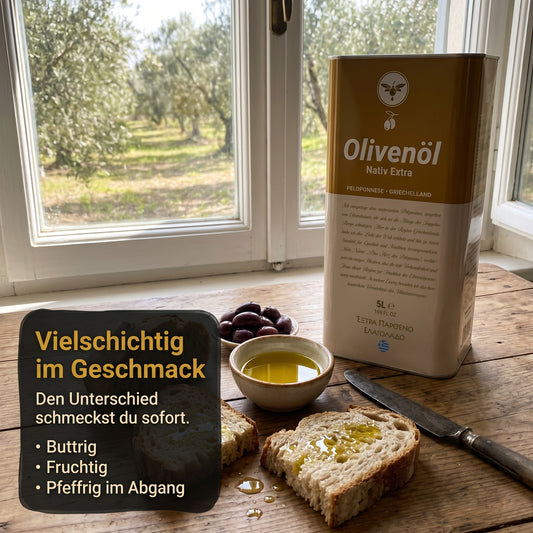
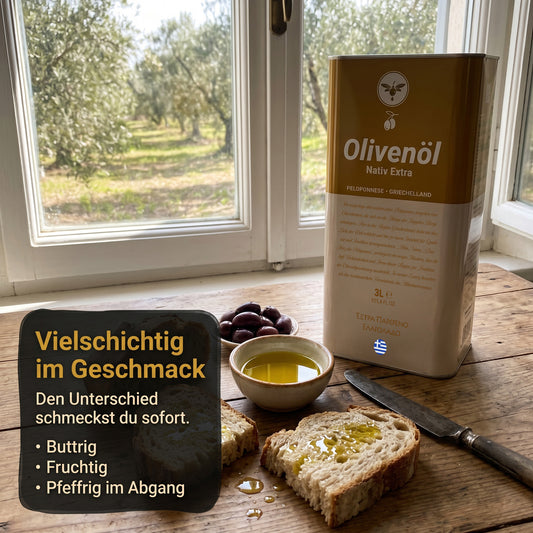
Man kann den Unterschied schmecken, bevor man die Terminologie lernt. Ein Olivenöl riecht grasig, pfeffrig und lebendig. Das andere ist milder, flacher und eher auf Funktion als auf Charakter ausgelegt. Das ist der eigentliche Ausgangspunkt für das Verständnis von kaltgepresstem gegenüber raffiniertem Olivenöl – nicht die Marketingsprache, sondern was mit der Frucht, dem Geschmack und der Endqualität passiert.
Wenn Sie Wert auf saubere Zutaten, natürliche Verarbeitung und Lebensmittel legen, die noch etwas von ihrer Herkunft in sich tragen, ist diese Unterscheidung wichtig. Olivenöl ist nicht einfach nur Olivenöl. Die Methode hinter der Flasche beeinflusst Aroma, Polyphenolgehalt, Nährwert und wie sich das Öl in Ihrer Küche verhält.
Kaltgepresstes vs. raffiniertes Olivenöl: Was ist der Unterschied?
Kaltgepresstes Olivenöl wird durch mechanisches Pressen oder Zentrifugieren von Oliven ohne übermäßige Hitze oder chemische Lösungsmittel hergestellt. Das Ziel ist einfach: Das Öl in einem Zustand zu bewahren, der der Frucht selbst nahekommt. Wenn die Verarbeitungstemperaturen niedrig bleiben, bleiben mehr der natürlichen Aromastoffe, Antioxidantien und Polyphenole der Olive erhalten.
Raffiniertes Olivenöl wird aus minderwertigem Virginöl oder Lampantöl hergestellt, das im ursprünglichen Zustand nicht angenehm oder zum Verzehr geeignet ist. Es wird dann behandelt, um Mängel in Geschmack, Geruch, Farbe und Säure zu beseitigen. Dieser Raffinationsprozess kann Hitze, Filtration, Desodorierung und andere industrielle Schritte umfassen, die darauf abzielen, ein neutrales, stabiles Öl zu erzeugen.
Der Kernunterschied ist also nicht nur der Geschmack. Es ist der Grad der Intervention. Kaltgepresstes Öl wird geschätzt, weil es weniger verändert ist. Raffiniertes Öl wird geschätzt, weil es standardisierter ist.
Warum Kaltpressung wichtig ist
Oliven sind empfindliche Früchte. Nach der Ernte beginnen sie schnell zu oxidieren und zu fermentieren, wenn sie nicht schnell verarbeitet werden. Hochwertige Hersteller gehen so schnell wie möglich von der Ernte zur Mühle und extrahieren dann das Öl unter kontrollierten Temperaturen. Dies schützt das, wonach viele Käufer überhaupt suchen: Frische, natürlichen Charakter und die Verbindungen, die Premium-Olivenöl erstrebenswert machen.
Kaltgepresstes Olivenöl neigt dazu, mehr Polyphenole zu behalten, das sind natürliche Antioxidantien, die mit dem pfeffrigen Gefühl im Hals verbunden sind. Dieses leichte Brennen ist oft ein gutes Zeichen. Es kann auf das Vorhandensein nützlicher Pflanzenstoffe hinweisen, die bei stark verarbeiteten Ölen reduziert werden.
Das bedeutet nicht, dass jedes kaltgepresste Öl automatisch exzellent ist. Erntezeitpunkt, Olivensorte, Lagerung und Produzentenstandards spielen immer noch eine Rolle. Aber wenn Sie stark verarbeitete Grundnahrungsmittel vermeiden möchten, ist die Kaltpressung ein wichtiges Qualitätsmerkmal.
Was Raffination mit Olivenöl macht
Raffination soll Probleme beheben. Wenn ein Öl unangenehme Gerüche, übermäßige Bitterkeit durch schlechte Handhabung oder Instabilität aufweist, kann die Raffination es nutzbar machen. Das Ergebnis ist normalerweise geschmacklich leichter, charakterlich blasser und insgesamt neutraler.
Für manche Käufer ist diese Neutralität genau der Punkt. Raffiniertes Olivenöl dominiert kein Gericht. Es ist oft günstiger und von Flasche zu Flasche gleichmäßiger. In der Großproduktion von Lebensmitteln oder bei sehr hohem häuslichen Verbrauch können diese Eigenschaften attraktiv sein.
Der Nachteil ist, dass die Raffination vieles von dem entfernt, was Olivenöl so unverwechselbar macht. Man verliert normalerweise Komplexität, Fruchtigkeit und einen erheblichen Anteil an natürlich vorkommenden Antioxidantien. Was bleibt, ist immer noch ein Öl aus Oliven, aber es ist viel weiter von der ursprünglichen Frucht entfernt als ein gut gemachtes kaltgepresstes Öl.
Geschmack, Aroma und Textur im echten Einsatz
Wenn Sie kaltgepresstes Olivenöl über Tomaten, warmen Sauerteig, gegrilltes Gemüse oder eine Schüssel Bohnen geben, trägt es aktiv zum Essen bei. Sie bemerken grüne Noten, Bitterkeit, Pfeffer und ein volleres Mundgefühl. Es verhält sich eher wie eine Zutat als wie ein Hintergrundfett.
Raffiniertes Olivenöl ist leiser. Es funktioniert, wenn Sie mehr Schmierung als Ausdruck wünschen. Beim Backen, Braten in der Pfanne oder in Gerichten, bei denen ein starker Olivengeschmack fehl am Platz wäre, kann dieses milde Profil nützlich sein.
Hier kommt viel Verwirrung her. Die Leute vergleichen die beiden oft so, als müsste das eine das andere in jeder Situation ersetzen. So funktionieren gute Küchen aber nicht wirklich. Es hängt davon ab, was Sie kochen und was das Öl beitragen soll.
Kaltgepresstes vs. raffiniertes Olivenöl für gesundheitsbewusste Käufer
Für gesundheitsbewusste Käufer ist die relevantere Frage oft nicht die Kalorienzahl, da beide Öle kalorienreiche Fette sind, sondern die Qualität. Kaltgepresstes Olivenöl ist im Allgemeinen die bessere Wahl, wenn Sie ein weniger verarbeitetes Produkt mit mehr natürlich erhaltenen Verbindungen suchen.
Da es schonender behandelt wird, behält es tendenziell mehr Vitamin E, Polyphenole und Geschmacksmoleküle. Das ist einer der Gründe, warum Premium-Olivenöl einen so starken Platz in der mediterranen Esskultur hat. Der Wert liegt nicht nur im Fettgehalt. Es ist die Kombination aus natürlichen Fetten mit Phytonährstoffen und Frische.
Raffiniertes Olivenöl kann immer noch in eine ausgewogene Ernährung passen, wird aber typischerweise eher aus praktischen Gründen als wegen seines Nährstoffreichtums gewählt. Wenn Ihre Priorität maximale natürliche Integrität ist, ist raffiniertes Öl nicht die erste Flasche, nach der Sie greifen sollten.
Was ist mit dem Rauchpunkt?
Der Rauchpunkt bekommt viel Aufmerksamkeit, oft mehr, als er verdient. Raffiniertes Olivenöl hat normalerweise einen höheren Rauchpunkt als kaltgepresstes Öl, was es automatisch besser zum Kochen erscheinen lässt. In Wirklichkeit ist das tägliche Kochen zu Hause nuancierter.
Kaltgepresstes natives Olivenöl extra eignet sich gut für viele gängige Kochmethoden, einschließlich Anbraten, Braten im Ofen und schonendes Braten in der Pfanne. Seine Stabilität wird nicht nur durch den Rauchpunkt, sondern auch durch den Antioxidantiengehalt und die Gesamtqualität beeinflusst. Ein frisches, gut gemachtes Öl kann überraschend widerstandsfähig sein.
Wenn Sie über längere Zeit bei sehr hoher Hitze kochen, kann raffiniertes Olivenöl einen praktischen Vorteil bieten. Für die meisten Haushalte ist das größere Problem jedoch, ob Geschmack und Qualität mit Ihrer Ernährungsweise übereinstimmen. Viele Menschen greifen bei Hitze standardmäßig zu raffinierten Ölen, auch wenn ein gutes kaltgepresstes Öl perfekt funktionieren würde.
Wie man die richtige Flasche auswählt
Wenn Sie Olivenöl zum Verfeinern, Dippen, für Dressings oder einfache Mahlzeiten wünschen, bei denen die Zutaten klar zur Geltung kommen sollen, wählen Sie kaltgepresst. Es bietet Ihnen Geschmack, Aroma und ein weniger verarbeitetes Profil. Dies ist in der Regel die bessere Wahl für Menschen, die bewusst einkaufen und Grundnahrungsmittel mit echter Herkunft und Charakter wünschen.
Wenn Sie ein neutrales Alltagsöl für die Zubereitung großer Mengen benötigen, kann raffiniertes Olivenöl diese Rolle erfüllen. Es ist oft billiger und weniger dominant. Allerdings sollte ein niedriger Preis nicht das einzige Kriterium sein. Ein Öl, das Sie täglich verwenden, hat einen echten Platz in Ihrer Gesundheitsroutine, daher ist Qualität immer noch wichtig.
Achten Sie beim Einkaufen über die Angaben auf dem Etikett hinaus. Achten Sie auf Ernteinformationen, Herkunft, Extraktionsmethode und darauf, ob der Hersteller klar über Qualität spricht, anstatt sich hinter vagen Begriffen zu verstecken. Eine dunkle Glasverpackung und ein frisches Erntedatum sind ebenfalls gute Zeichen, da Licht und Zeit das Öl schnell abbauen.
Für Käufer, die Wert auf Reinheit und Funktion legen, ist hier die sorgfältige Beschaffung wichtig. Ein sorgfältig ausgewähltes kaltgepresstes Olivenöl aus einer vertrauenswürdigen Herkunft bietet mehr als nur Geschmack. Es unterstützt eine sauberere, bewusstere Ernährungsweise.
Wann raffiniertes Olivenöl sinnvoll ist
Es gibt keinen Grund, so zu tun, als hätte raffiniertes Olivenöl keinen Platz. Es kann in Rezepten nützlich sein, wo der Olivengeschmack mit empfindlichen Zutaten konkurrieren würde. Es kann auch eine praktische Option in Haushalten sein, die in großen Mengen kochen und eine preisgünstigere Flasche benötigen.
Aber es hilft, ehrlich zu sein, was man kauft. Raffiniertes Olivenöl wird normalerweise aus Bequemlichkeit und Neutralität gewählt, nicht weil es den höchsten Ausdruck der Olive selbst darstellt. Wenn Ihre Werte zu minimal verarbeiteten Lebensmitteln, Transparenz und natürlichen Vorteilen neigen, wird kaltgepresstes Öl in der Regel besser passen.
Die bessere Frage ist nicht, welches das Beste ist, sondern welches das Richtige für Sie ist
Kaltgepresstes vs. raffiniertes Olivenöl ist nicht nur ein technischer Vergleich. Es spiegelt zwei sehr unterschiedliche Lebensmittelphilosophien wider. Die eine priorisiert die Erhaltung der Frucht, natürlicher Verbindungen und authentischen Geschmacks. Die andere priorisiert Korrektur, Konsistenz und Massenmarkttauglichkeit.
Wenn Sie ein Öl wünschen, das lebendig schmeckt und einen saubereren Vorratsschrank unterstützt, ist kaltgepresstes Öl die stärkere Wahl. Wenn Sie Neutralität und geringere Kosten für bestimmte Küchenaufgaben wünschen, kann raffiniertes Öl immer noch brauchbar sein. Für viele gesundheitsbewusste Haushalte ist der befriedigendste Ansatz einfach: Verwenden Sie ein hochwertiges kaltgepresstes Olivenöl, wo Qualität wirklich geschmeckt werden kann, und lassen Sie Ihr Essen von einer Zutat profitieren, die sich noch daran erinnert, woher sie kommt.
Ein gutes Olivenöl sollte sich nicht wie ein Massengut anfühlen. Es sollte alltägliche Mahlzeiten ehrlicher, lebendiger und ein wenig näher an den mediterranen Tisch bringen.