Aleppo-Seife: Inhaltsstoffe verständlich erklärt
Wenn Sie schon einmal ein Stück Alepposeife in die Hand genommen und sich gefragt haben, warum sich eine Rezeptur cremig anfühlt, während eine andere klärender wirkt, liegt die Antwort fast immer in der Zutatenliste. Die Inhaltsstoffe der Alepposeife einfach erklärt bedeutet, über den rustikalen Block hinaus zu schauen und zu verstehen, wie eine sehr kurze Formel zu sehr unterschiedlichen Ergebnissen auf Haut, Kopfhaut und sogar im Bart führen kann.
Diese Einfachheit ist genau der Grund, warum Alepposeife ein so dauerhaftes Vertrauen gewonnen hat. In einem Markt voller langer Zutatenlisten und schwer zu entziffernder Zusatzstoffe zeichnet sich die traditionelle Alepposeife dadurch aus, dass die Kernformel unkompliziert ist. Aber einfach bedeutet nicht primitiv. Jede Zutat hat eine präzise Rolle, und kleine Änderungen im Gleichgewicht können das gesamte Erlebnis verschieben.
Alepposeife Inhaltsstoffe erklärt: die traditionelle Formel
Authentische Alepposeife wird traditionell nur aus wenigen Kernzutaten hergestellt: Olivenöl, Lorbeerbeeröl, Wasser und Lauge. Das ist die klassische Grundlage. Nach der Verseifung ist die Lauge nicht mehr in ihrer ursprünglichen Form vorhanden, da sie mit den Ölen reagiert hat, um Seife zu bilden.
Dies ist wichtig, da viele Menschen das Wort Lauge sehen und annehmen, dass die Formel aggressiv sein muss. Bei richtig hergestellter Seife funktioniert das nicht so. Lauge ist notwendig, um Öle in Seife umzuwandeln, aber in dem fertigen, ausgehärteten Stück verwenden Sie das Ergebnis dieser Reaktion und nicht rohe Lauge auf Ihrer Haut.
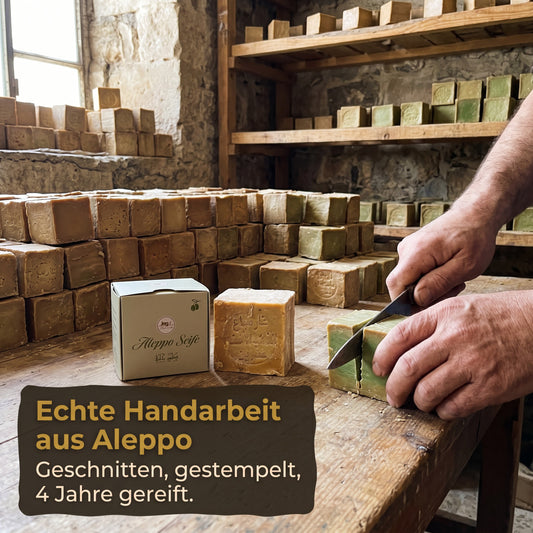
Die traditionelle Herstellung beinhaltet auch eine lange Reifezeit. Frisch hergestellte Alepposeife ist nicht dasselbe wie ein vollständig ausgehärtetes Stück. Mit der Zeit härtet die Seife aus, die Feuchtigkeit reduziert sich, und das Stück wird milder und länger haltbar. Dieser Alterungsprozess ist Teil des Produkts, nicht ein nachträglicher Gedanke.
Olivenöl: die sanfte Basis
Olivenöl ist das Rückgrat der Alepposeife. Es bildet den Hauptkörper des Stücks und ist weitgehend verantwortlich für das milde, geschmeidige Gefühl, das die Menschen mit traditioneller Seife auf Olivenbasis verbinden. Wenn Sie aggressive Reinigungsmittel gewohnt sind, die die Haut straff zurücklassen, ist Olivenöl die Zutat, die Alepposeife in die entgegengesetzte Richtung drängt.
Bei der Seifenherstellung neigt Olivenöl dazu, einen cremigen, weicheren Schaum zu erzeugen, anstatt große Blasen. Das kann Menschen anfangs überraschen. Eine schaumarme Wäsche ist nicht unbedingt ein schwaches Reinigungsmittel. Es bedeutet oft nur, dass die Formel weniger auf visuellen Effekt getrimmt und mehr auf Hautkomfort ausgerichtet ist.
Ein höherer Olivenölanteil bedeutet in der Regel, dass sich das Stück sanfter, pflegender und besser für trockene oder leicht reizbare Haut anfühlt. Es kann eine gute Wahl für die Gesichts- und Körperanwendung sein, besonders wenn Sie eine „Clean Beauty“-Routine mit weniger unnötigen Extras bevorzugen.
Lorbeerbeeröl: der einzigartige Inhaltsstoff
Lorbeerbeeröl ist das, was der Alepposeife ihre Identität verleiht. Ohne es hätten Sie eine Olivenölseife, aber keine echte Alepposeife im traditionellen Sinne. Lorbeeröl trägt zu einem reinigenderen, etwas kräftigeren Reinigungseffekt bei, und es ist auch das, was viele Menschen mit dem unverwechselbaren Kräuterduft der Seife verbinden.
Der Prozentsatz an Lorbeeröl ist eines der wichtigsten Details auf dem Etikett. Ein Stück mit 5 % Lorbeeröl fühlt sich anders an als ein Stück mit 20 %, 30 % oder 40 %. Im Allgemeinen neigt ein höherer Lorbeeranteil dazu, die Seife klärender wirken zu lassen und sie besser für fettige oder zu Unreinheiten neigende Haut geeignet zu machen. Niedrigere Prozentsätze fühlen sich oft milder und universeller an.
Hier kommt es auf Ihren Hauttyp an. Mehr Lorbeer ist nicht automatisch besser. Wenn Ihre Haut trocken, reaktiv oder bereits gestresst ist, kann ein sehr hoher Lorbeeranteil für die tägliche Gesichtsreinigung zu intensiv sein. Wenn Sie hingegen ein tiefer reinigendes Stück für fettige Haut, Kopfhautpflege oder gelegentliche Anwendung wünschen, ist ein höherer Prozentsatz möglicherweise genau das Richtige.
Wasser: einfach, aber essenziell
Wasser bekommt selten viel Aufmerksamkeit, ist aber im Seifenherstellungsprozess unerlässlich. Es hilft, die Lauge aufzulösen und ermöglicht eine gleichmäßige Verseifung. Im endgültig ausgehärteten Stück ist ein Großteil des ursprünglichen Wassers während der Reifung verdunstet, was ein Grund dafür ist, dass ausgehärtete Alepposeife so dicht und haltbar wird.
Diese Dichte ist Teil des Reizes. Ein gut ausgehärtetes Stück hält in der Regel länger, fühlt sich fester in der Hand an und funktioniert über einen längeren Zeitraum gleichmäßiger.
Lauge: notwendig, aber kein verbleibender Zusatzstoff
Lauge kann einschüchternd wirken, besonders für Käufer, die aggressive Chemikalien aktiv meiden. Aber traditionelle Seife kann ohne ein Alkali nicht existieren. Ob die Seife handgemacht oder industriell ist, auf Oliven- oder Kokosbasis, die Verseifung erfordert sie.
Der entscheidende Unterschied ist dieser: Lauge ist ein Verarbeitungsbestandteil, kein fertiges Hautpflegeprodukt. In einer richtig hergestellten Seife reagiert sie mit den Ölen und wird im Prozess verbraucht. Deshalb kann hochwertige traditionelle Seife immer noch mit einem sauberen, minimalistischen Ansatz übereinstimmen.
Warum Zutatenverhältnisse wichtiger sind als lange Versprechen
Ein modernes Schönheitslabel kann gleichzeitig Hydration, Gleichgewicht, Glanz und Barriereunterstützung versprechen. Alepposeife funktioniert anders. Ihre Leistung resultiert weniger aus Marketingjargon als vielmehr aus dem Verhältnis von Olivenöl zu Lorbeerbeeröl.
Wenn ein Stück hauptsächlich Olivenöl mit einer bescheidenen Menge Lorbeeröl enthält, erwarten Sie eine mildere Reinigung und ein angenehmeres Hautgefühl. Steigt der Lorbeerölanteil, erwarten Sie ein saubereres, frischeres Ergebnis, das fettiger oder Mischhaut besser entgegenkommt. Keines ist universell das Beste.
Für viele Haushalte ist dies die praktische Wahl. Ein Stück mit weniger Lorbeeröl kann als tägliche Körper- oder Gesichtsseife für normale bis trockene Haut sinnvoll sein. Ein mittlerer Lorbeerölanteil kann diejenigen ansprechen, die ein ausgewogenes, vielseitiges Stück wünschen. Eine Version mit hohem Lorbeerölanteil ist möglicherweise besser für Haut geeignet, die eine stärkere Reinigung gut verträgt.
Alepposeife Inhaltsstoffe erklärt für das Etikettenlesen
Wenn Sie ein Zutatenetikett lesen, ist eine kurze Formel in der Regel ein gutes Zeichen. Traditionelle Alepposeife benötigt keine Duftmischungen, Farbstoffe, Silikone, Konservierungsmittel oder synthetische Schaumbildner, um ihre Aufgabe zu erfüllen.
Möglicherweise werden die Inhaltsstoffe in ihrer verseiften Form aufgeführt, wie Natriumolivat und Natriumlaurat, anstelle von einfachem Olivenöl und Lorbeeröl. Das ist normal und spiegelt oft formale kosmetische Kennzeichnungsstandards wider. Es bedeutet nicht, dass die Seife weniger authentisch ist. Es bedeutet einfach, dass die Öle als die Seifenverbindungen aufgeführt wurden, die sie nach der Verseifung werden.
Was Fragen aufwerfen sollte, ist eine Formel, die mit Parfüm, künstlichen Farbstoffen, EDTA oder einer langen Liste von Zusatzstoffen aufgefüllt ist, die das Produkt von der traditionellen Alepposeife entfernen. Einige hinzugefügte Inhaltsstoffe sind nicht automatisch schlecht, aber sie verändern den Charakter des Stücks. Wenn Sie speziell Alepposeife wegen ihrer Reinheit und Einfachheit kaufen, ist kürzer in der Regel besser.
Natürlicher Geruch und Farbe sind keine Mängel
Authentische Alepposeife hat oft einen erdigen, kräuterartigen Geruch und ein etwas ungleichmäßiges Aussehen. Die Außenseite kann durch Oxidation während des Reifens braun oder beige sein, während die Innenseite grün bleibt. Dieser Kontrast ist eines der klassischen visuellen Merkmale eines traditionell gereiften Stücks.
Für Käufer, die glatte, stark parfümierte Seifen gewohnt sind, mag dies schlicht aussehen. Aber schlicht ist oft der Punkt. Ein natürliches Stück braucht keine leuchtende Farbe oder starken Duft, um Qualität zu signalisieren.
Was diese Inhaltsstoffe für verschiedene Hautbedürfnisse bedeuten
Wenn Ihre Haut zu Trockenheit oder Empfindlichkeit neigt, ist ein Stück mit einem geringeren Lorbeeranteil oft der sicherere Ausgangspunkt. Die Olivenölbasis fühlt sich in der Regel schützender an, und Sie neigen weniger dazu, die Haut zu überreinigen.
Wenn Ihre Haut fettig ist, zu Unreinheiten neigt oder Sie das besonders saubere Gefühl bevorzugen, könnte ein höherer Lorbeeranteil besser zu Ihnen passen. Dennoch ist die Häufigkeit wichtig. Selbst eine wunderbare traditionelle Seife kann sich zu aktiv anfühlen, wenn sie zu oft auf bereits strapazierter Haut angewendet wird.
Für Haar und Kopfhaut variieren die Ergebnisse. Manche Menschen lieben Alepposeife als minimalistisches Reinigungsmittel, während andere Seifenstücke je nach Wasserhärte, Kopfhautzustand und Haartyp als schwierig empfinden. Das macht die Seife weder gut noch schlecht. Es bedeutet einfach, dass traditionelle Formeln weniger universell sind als moderne synthetische Shampoos.
Das ist auch der Grund, warum eine qualitätsorientierte Marke wie Jegit bei bewusst einkaufenden Kunden Anklang findet. Wenn die Formel einfach ist, sind Beschaffung und Produktion wichtiger. Man versteckt keine mittelmäßigen Rohstoffe hinter Parfüm und Füllstoffen.
Der wahre Wert einer kurzen Zutatenliste
Alepposeife erinnert uns daran, dass weniger Inhaltsstoffe immer noch ein reichhaltigeres Produkterlebnis bieten können. Olivenöl sorgt für Weichheit. Lorbeerbeeröl verleiht Charakter. Wasser und Lauge ermöglichen die Transformation. Zeit verleiht dem Stück Reife.
Diese Art von Formel spricht für eine bewusstere Wahl der Körperpflege. Nicht saisonal im Trend, nicht überladen mit Versprechen und nicht nur dazu gedacht, im Regal zu beeindrucken. Einfach eine traditionelle Seife mit verständlichen Inhaltsstoffen und einem Zweck, den Sie jedes Mal spüren können, wenn Sie sie verwenden.
Wenn Sie wissen, was jeder Inhaltsstoff bewirkt, wird der Kauf von Alepposeife viel einfacher. Sie jagen keine Schlagworte. Sie wählen das Oliven-Lorbeer-Gleichgewicht, das zu Ihrer Haut, Ihrer Routine und der Art von Sauberkeit passt, die Sie tatsächlich wünschen.